A performance regression is a deterioration in speed, resource efficiency, or responsiveness after a change. Users may experience typing lag, slower checkout, longer exports, frame drops, or delayed application feedback. section 1.2.3 section 2.1.3
Regressions are operational and business problems, not merely technical defects. They can reduce conversions, trigger cancellations, consume planned engineering capacity, and damage user trust. section 2.1.1 section 2.3.1 section 2.5.4
Recurring regression patterns include:
- A release appears successful in staging but becomes two seconds slower on mid-range phones, reducing checkout completion. section 2.1.1
- A desktop rendering change doubles export time, introduces playback frame drops, and drives users toward an earlier version or competitor. section 2.1.3
- Small independently added scripts accumulate until a web product becomes slower and investigations become reactive and fragmented. section 2.3
Manage regressions by identifying a critical flow, establishing a baseline, modeling the change’s impact, and communicating the result in money, time, or trust. Set performance targets alongside feature goals, and make any temporary regression explicit with an optimization commitment. section 2.5 section 2.5.4 section 3.4.4
Figure 2.2 Workflow for estimating the cost of performance issues.
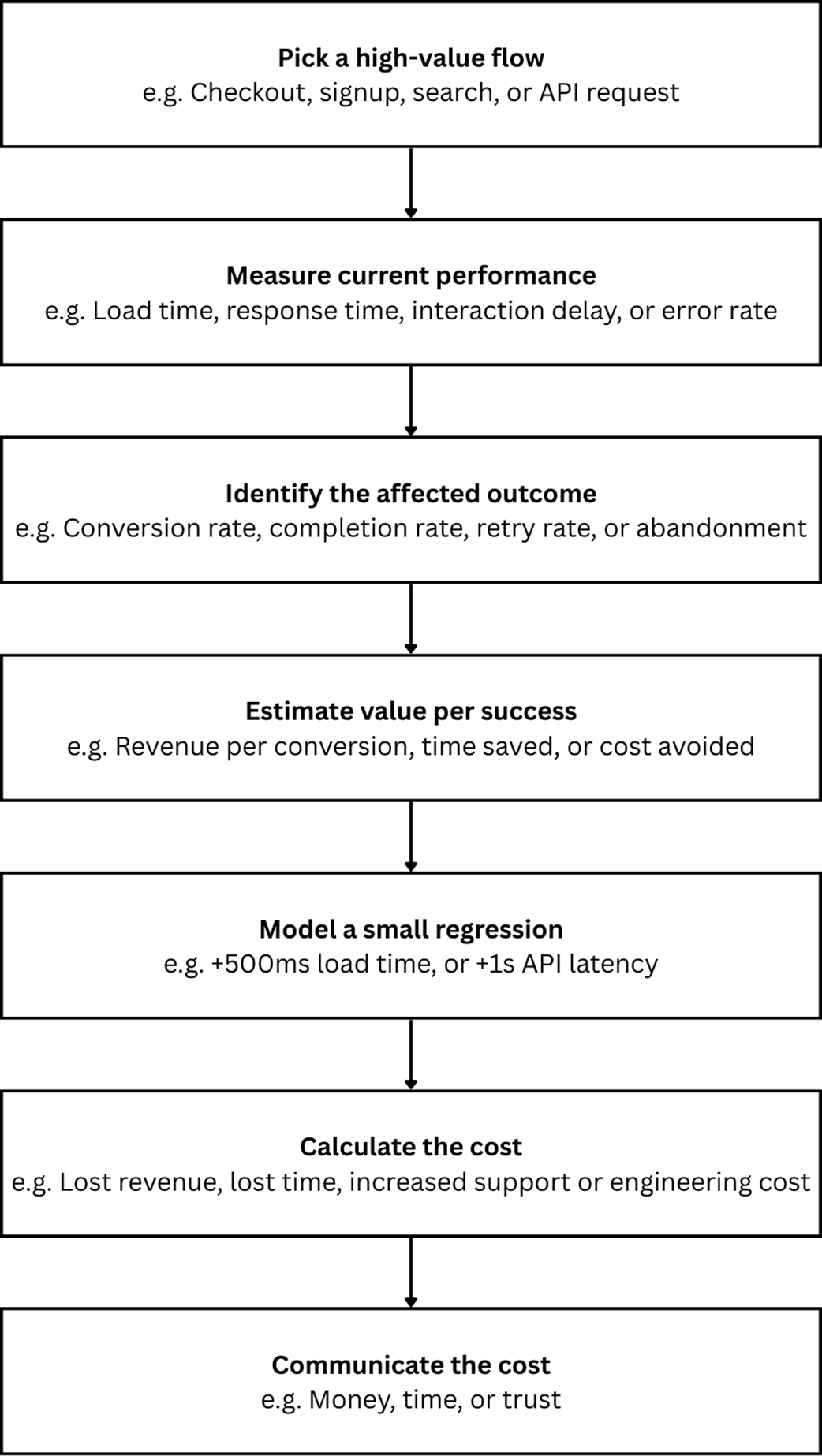
Use the workflow to estimate the cost of a regression from a critical flow, baseline, modeled impact, and stakeholder-facing result. section 2.5