A rendering engine turns HTML, CSS, and JavaScript into the interactive experience shown in a browser or app. It is not the browser itself: an engine can also render content in an installed PWA or a web view. section 2.1.1
The three major engine families are Blink, WebKit, and Gecko. They aim to follow the same web standards, but implementation details, optimizations, and release schedules differ. JavaScript execution is a separate concern, though its engine is typically grouped with the rendering engine: Chrome uses V8, while Firefox uses SpiderMonkey. section 2.1.1
Build for the engine the user has, not one you wish they had:
- Supply source JavaScript; application code cannot choose the engine that runs it. section 2.1.1
- Use feature detection and progressive enhancement when capabilities differ. Baseline and Interop help track cross-engine consistency. section 2.1.1
Figure 2.2 This is the open-source PWA image converter Squoosh installed on iOS, macOS, and Android with different browsers and web engines rendering its content in a standalone window.
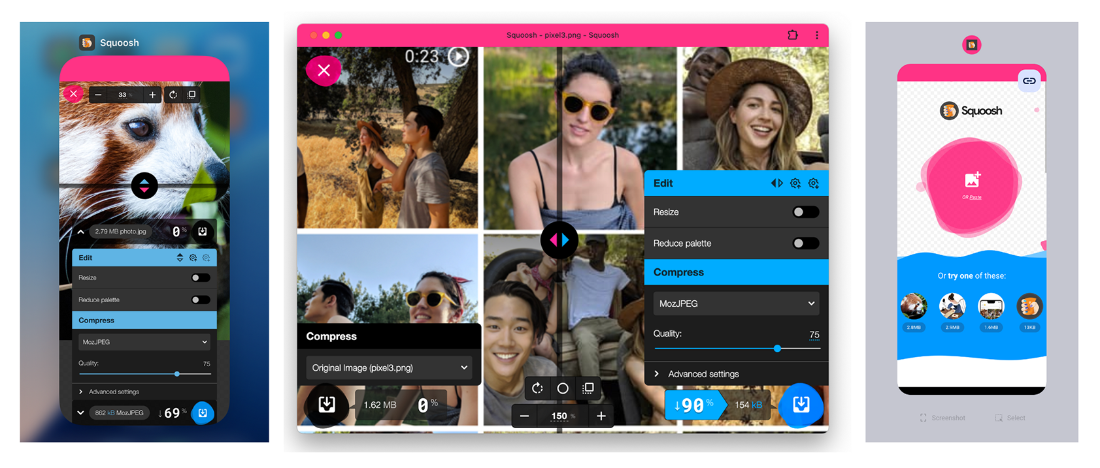
The same installed PWA appears on iOS, macOS, and Android, illustrating that a standalone app window still relies on a web engine. section 2.1.1