A visitor views a product but leaves without buying. Retargeting, also called remarketing, reconnects with that visitor through ads informed by the earlier visit. The ad may encourage a conversion later, or simply make the product easier to recall. section 6.2.1 section 7.2
The tactic can draw on different data and activation arrangements:
- Third-party cookie tracking can support ads for a viewed product on other websites serving digital ads. section 6.2.1
- First-party site-visitor data can shape paid-media audiences and ads based on abandoned carts or recently viewed products. Dynamic product ads can feature products a visitor has shown interest in. section 7.2
- A data clean room can match hashed visitor data with a retailer’s customer database to support personalized ads across platforms. This route calls for consent checks, encryption, audits, and limits on data retention. section 8.2
A reminder after a product visit
Someone who viewed a probiotic infant-formula page may later see an ad for that formula beside a pediatrician’s blog content. They might not click or buy immediately, but the reminder can increase product-name recall. section 6.2.1
Retargeting differs from lookalike targeting: it returns to people who have already visited, rather than seeking new people similar to existing customers. Track conversions and post-click behavior to refine campaigns, while treating consent and data handling as part of the activation decision. section 7.2 section 8.2
Figure 8.4 A high-level secure matching process in a data clean room
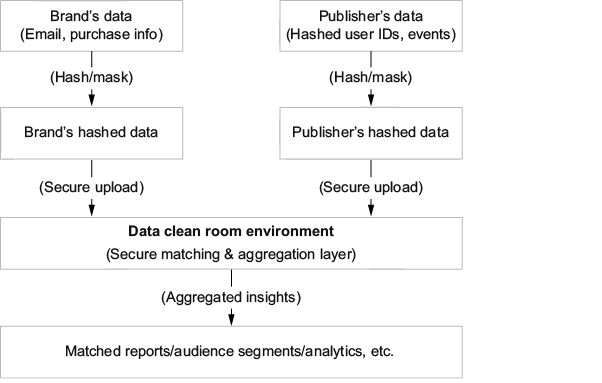
Shows the high-level secure matching process behind the clean-room route to retargeting. section 8.2
