Revocation invalidates a security token before, or at the end of, its normal validity period. For certificates, it matters when a private key is exposed or the holder should no longer have access: the certificate authority marks the certificate as untrusted so clients stop accepting it. section 9.1.5 section 9.3
A practical revocation flow includes these responsibilities and checks:
- Report the compromised or unwanted certificate to its certificate authority. section 9.1.5
- Record the certificate on a certificate revocation list so relying clients can identify it. section 9.1.5
- Check revocation during certificate validation before deciding whether to trust the certificate; CRLs and OCSP provide the stated mechanisms. section 9.1.5 section 8.3
- Treat certificate revocation as an operational task usually handled by DevOps specialists or platform engineers, while developers understand its purpose. section 9.1.5
A stolen private key
A private key is accidentally published online before its certificate expires. The owner asks the CA to revoke the certificate; the CA adds it to a revocation list, and clients check that status before trusting it. The same security concern appears with refresh tokens: prompt revocation is one mechanism for limiting misuse after a token is lost or stolen. section 9.1.5 section 13.2
Figure 9.1 The certificate life cycle. This figure walks you through the four main steps of getting a valid digital certificate: generating a key pair, creating a CSR, having it validated by a CA, and receiving the issued certificate.
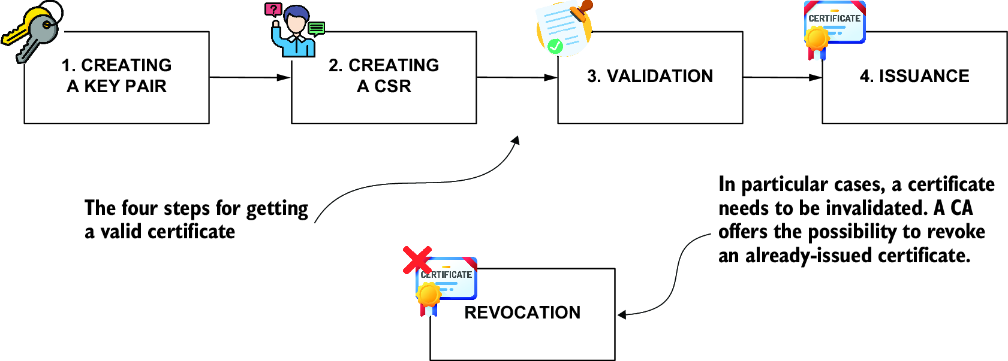
Use the certificate life-cycle diagram to place revocation after issuance and alongside certificate expiry. section 9.1



