A risk factor is a dimension of a generative AI system’s exposure that can increase the likelihood or consequences of failure or exploitation. Exposure grows with what a system can see, do, and decide; each additional factor compounds risk. section 4.2
Two factors illustrate how exposure can arise from the surrounding system as well as the model:
- Environment: weak logging, secret management, access controls, vendor security, or unvetted plugins can expose an application. An insecure database can create serious risk even when the model is not at fault. section 4.2
- Model: reliance on an unvetted or uncontrolled model can introduce risks from malicious training instructions, unassessed weights, vendor updates, or fine-tuning that poisons data, weakens safeguards, or memorizes sensitive information. section 4.2
Figure 4.2 Security Risk Factors. Each additional factor compounds the risk.
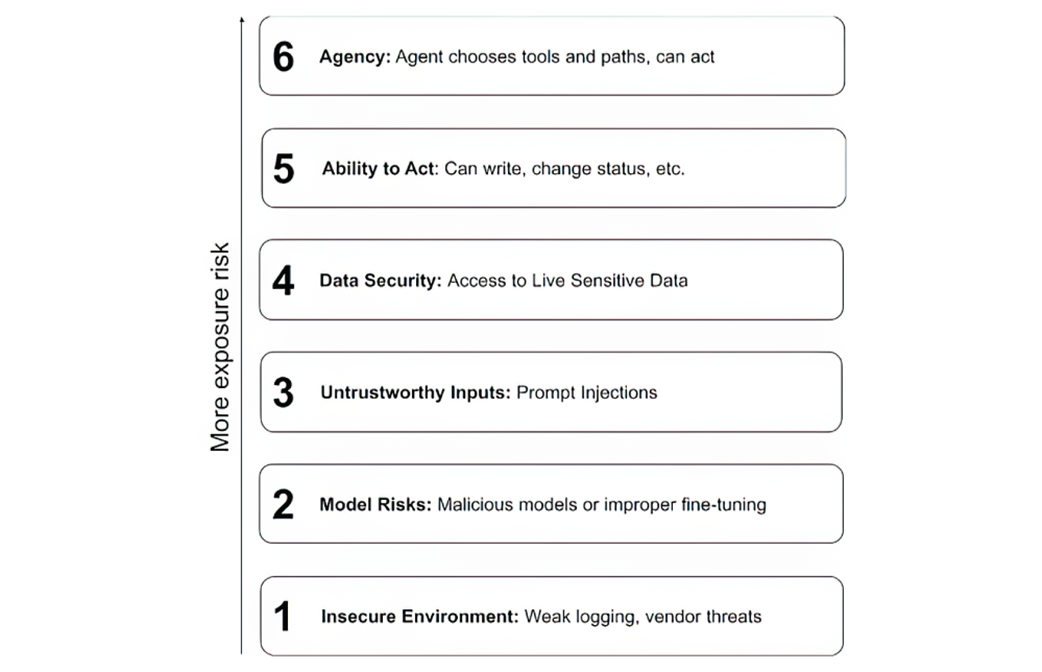
The figure summarizes how additional risk factors compound exposure. section 4.2
