liveBook · Manning

Scenario analysis

As explained in Demand Forecasting Best Practices

Scenario analysis is a technique for evaluating how alternative assumptions or input conditions affect predicted outcomes.

Scenario analysis evaluates how changing demand-driver assumptions changes a forecast. It helps interpret black-box machine-learning models when feature importance shows attention but not impact. section 15.1.2

Run alternative forecast scenarios, such as including or excluding discounts, then compare predicted demand. The difference provides an estimate of promotional impact and expected uplift. Scenario forecasting also helps when future macroeconomic indicators are unknown, although forecasting those indicators first is described as generally less robust. section 15.1.2 section 14.2.1

Promotion scenarios

A forecast run with promotions and another without them can reveal a predicted total uplift of 17%, while also showing lower sales before and after the promotional period. section 15.1.2

Figure 15.3 Promo uplift and scenarios
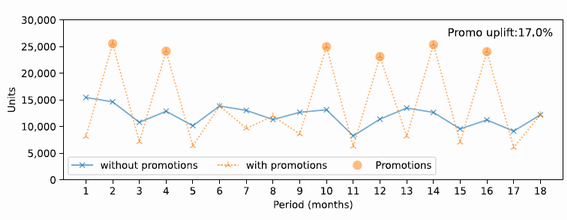
Inspect the promo-uplift figure to compare forecast scenarios and the demand effect attributed to promotions. section 15.1.2

How Demand Forecasting Best Practices covers it

How deep it goes
Explains the comparison method and its interpretive value, but does not expose the model’s internal level, trend, or seasonality.
Examples
Uses with-and-without-discount forecasts, a 17% promotional uplift, and macroeconomic scenario forecasting.
What it assumes
Assumes familiarity with forecasts and demand drivers while contrasting scenario analysis with feature importance.
What you can do after
Evaluate demand-driver effects by comparing alternative forecasts and interpreting their predicted differences.
How it connects
Connects machine learning, feature importance, demand drivers, promotions, macroeconomic indicators, and forecasting.

Related concepts

This explainer was generated by Manning's knowledge graph from the text of Demand Forecasting Best Practices. The section links point to the parts of the book it draws on.