liveBook · Manning

Scope of interpretation

As explained in Effective Data Analysis

The scope of interpretation is the degree to which analytical findings can reasonably be generalized beyond the people included in the analysis.

Scope of interpretation is the degree to which findings can reasonably be generalized beyond the people included in an analysis. section 2.2.1 section 2.4

Use scope of interpretation to keep analytical communication precise and actionable:

  • Separate broad population claims from conclusions supported only by the analyzed group. section 2.2.1
  • Clarify whether results suggest correlation, causation, statistical significance, or no relationship after a non-significant result. section 2.2.1
  • State limitations in deliverables so stakeholders can ask stronger follow-up questions and take appropriately scaled action. section 2.2.1 section 2.4

Help Center analysis

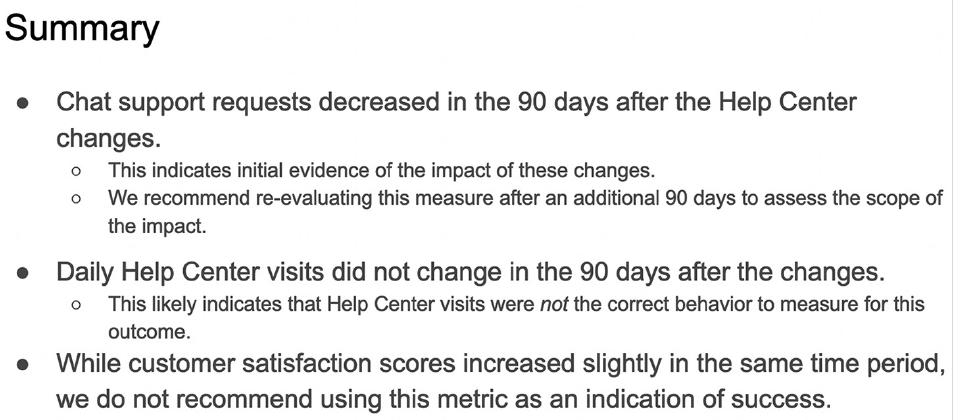
A Help Center visit and chat-volume analysis can lose its original boundaries as results circulate, eventually supporting executive inferences about future search-optimization efforts. A clarifying slide or addendum can preserve the intended scope. section 2.2.1

A slide such as this delineates the scope of interpretation and helps ensure the long-term success of your work.
sidebar figure

A scope-setting slide helps distinguish supported findings from broader stakeholder inferences. section 2.2.1

How Effective Data Analysis covers it

How deep it goes
Defines generalizability and interpretation boundaries, then addresses correlation, causation, significance, and null results without statistical procedures.
Examples
Uses a Help Center visit and chat-volume analysis alongside scope-setting presentation slides and an addendum.
What it assumes
Assumes basic familiarity with analytics findings and stakeholder deliverables while reinforcing precise interpretation of statistical terms.
What you can do after
Evaluate findings and communicate appropriately bounded conclusions that support informed stakeholder action and follow-up questions.
How it connects
Connects generalizability with correlation, causation, statistical significance, null hypotheses, precision of language, and stakeholder communication.

Related concepts

This explainer was generated by Manning's knowledge graph from the text of Effective Data Analysis. The section links point to the parts of the book it draws on.