A follower node is a secondary Schema Registry node in a deployment with one primary node. It serves client reads while the primary owns schema writes. section 3.2.3
A schema registration or update follows this path:
- A client may send the request to any Schema Registry node. section 3.2.3
- The follower forwards a registration or update request to the primary node. section 3.2.3
- The primary writes the schema record to the compacted, single-partitioned schemas topic. section 3.2.3
- The follower returns the primary node’s response, while all nodes consume schema updates and serve reads. section 3.2.3
Registering a schema through a follower
A client can register or update a schema through a follower’s endpoint. The follower does not write the schema itself: it forwards the request, receives the primary node’s response, and returns that response to the client. Read requests can be served directly by the follower. section 3.2.3
Figure 3.5 All Schema Registry nodes can serve read requests.
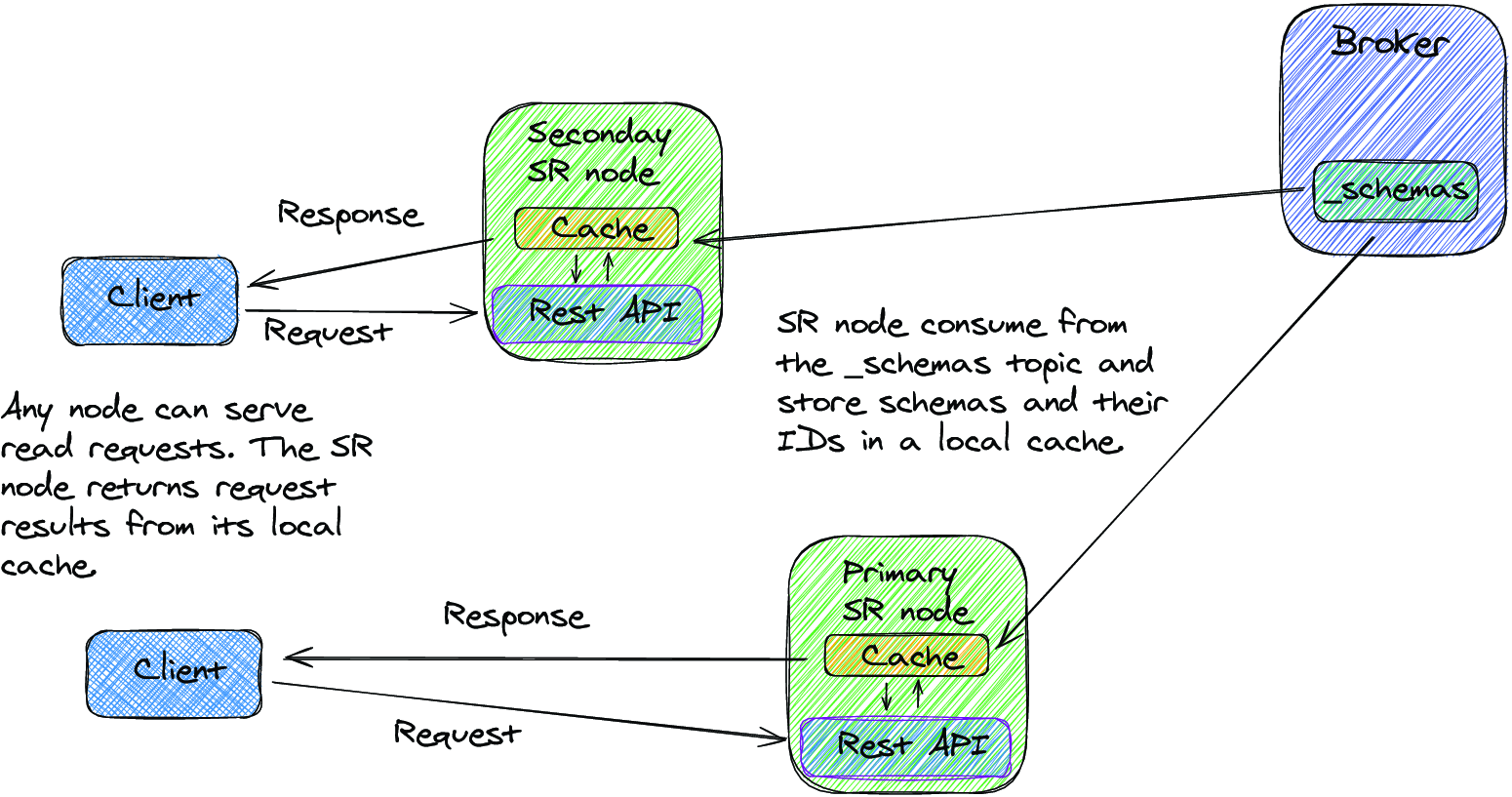
Use the architecture diagram to trace how every Schema Registry node serves reads while secondary nodes forward writes to the primary. section 3.2.3


