A security operations center (SOC) is a cybersecurity function that continuously monitors potential threats, detects and analyzes suspicious activity, and coordinates incident response. It brings together roles such as security analysts, digital forensics specialists, and incident responders. section 5.0 section 5.5
A SOC helps an organization limit disruption and damage when risks become incidents. Its work supports the incident response lifecycle: preparation, detection and analysis, containment, eradication and recovery, and post-incident improvement. section 5.0 section 5.6
A typical SOC divides work by complexity and required expertise:
- Tier 1 analysts perform initial triage and handle most alerts and lower-level incidents by following predefined steps. section 5.5.1
- Tier 2 analysts investigate incidents more deeply and escalate cases requiring greater expertise. section 5.5.1
- Tier 3 analysts and threat hunters handle major or complex incidents involving significant threats or critical systems. section 5.5.1
Detection and response tools
A SIEM centralizes logs, correlates activity, and generates alerts for analysts. A SOAR platform can then automate actions such as isolating infected endpoints, blocking malicious IP addresses, disabling compromised accounts, and triggering response playbooks. section 12.6.3
Figure 5.2 Illustration of the Security Operation Center structure
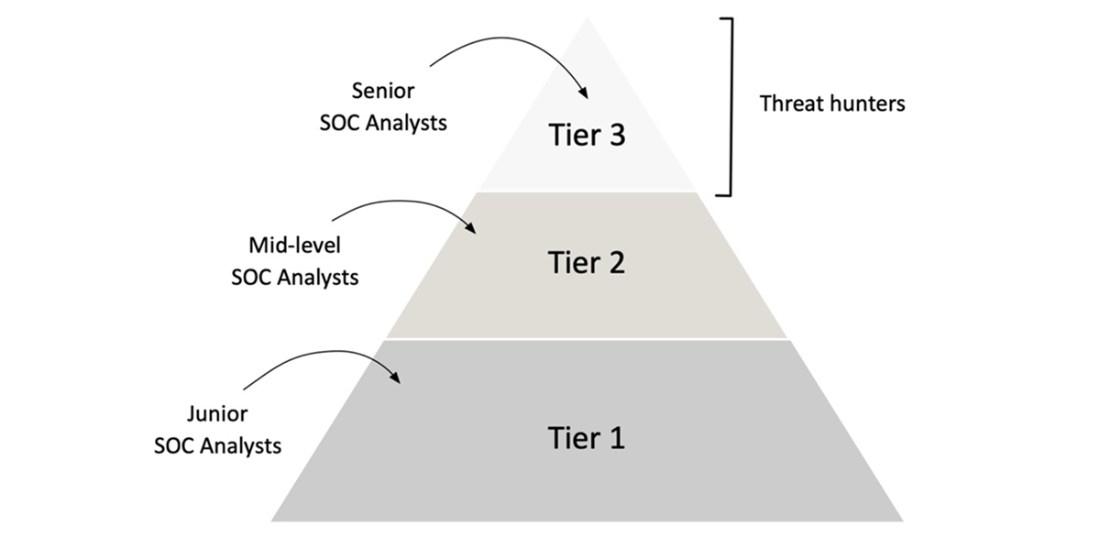
Use the SOC structure illustration to compare analyst tiers, responsibilities, and escalation paths. section 5.5.1
