A seeds argument is a node configuration setting that gives a new ScyllaDB node one or more contact points for initial cluster discovery. The joining node contacts a seed, learns the cluster topology through gossip, and begins receiving the data it should own. After joining, the seed list no longer serves a function. section 2.1.3 section 9.1.2
Joining a Docker cluster
Start the first node, then point the second node at it: `docker run --name scylla-2 --hostname scylla-2 --network scylla-network -d -p 9242:9042 -p 19242:9042 scylladb/scylla:5.4 --seeds=scylla-1 --reactor-backend=epoll`. Here, `scylla-1` is the existing node that `scylla-2` contacts while joining. Check `nodetool status --resolve-ip` until the new node changes from Joining to Up and Normal. section 2.1.3
Configure the seed address according to the cluster state:
- Use the address of at least one existing node when adding a node to an established cluster. section 9.1.2
- Use the first node’s own address when bootstrapping a new cluster. section 9.1.2
- Provide comma-delimited IP addresses or hostnames; a command-line seeds argument overrides the value in scylla.yaml. section 9.1.2
- Keep the cluster name consistent, because a seed node rejects a joining node with an incorrect name. section 9.1.2
Figure 9.1 Seeds in the config file tell a new node what nodes to contact.
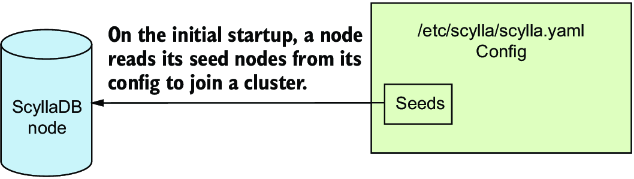
Use the topology figure to visualize how seed configuration directs a new node toward the nodes it must contact. section 9.1.2
