A self-fulfilling prophecy occurs when an expectation shapes behavior until the expected outcome becomes more likely. In collaborative modeling, assumptions about a group’s needs, biases, or preferred tools can influence facilitation and reinforce the original assumption. section 7.3.1
When a modeling tool is not used
During an EventStorm session, participants returned to private discussion instead of visualizing their ideas. Without more structure, the group stayed with traditional methods, which could confirm an expectation that the new tool was unsuitable. Later, facilitators used lessons from that experience to anticipate bias and add nudges during an Example Mapping session at BigScreen. section 7.3.1
Avoid the cycle by treating collaborative tools as aids rather than complete solutions: provide structure, guidance, and support; question assumptions about the group; and examine the facilitator’s own biases. section 7.3.1
Figure 7.4 An example of how an Example Mapping looked at BigScreen. The groups are divided and are using index cards on the table to collaboratively model and discover new scenarios and acceptance criteria.
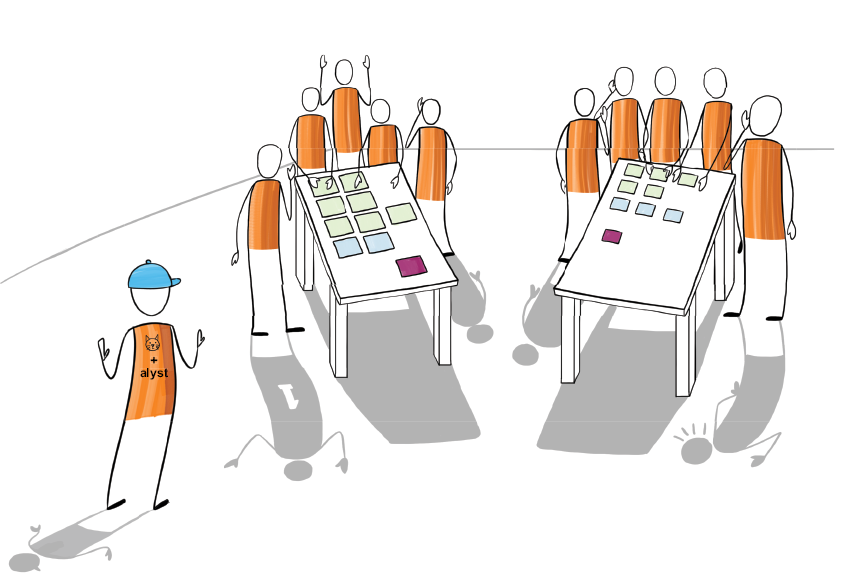
Use the Example Mapping arrangement to see how divided groups use index cards to discover scenarios and acceptance criteria collaboratively. section 7.3.1
