liveBook · Manning

Self-regulation

As explained in Lead Developer Career Guide

The capability to regulate one's own emotions and help other people regulate theirs without impulsive or destructive reactions.

Self-regulation is the ability to manage emotions in yourself and others, avoiding impulsive or destructive reactions while offering support and empathy. section 11.1.1

For lead developers, self-regulation supports conflict resolution, effective communication, and steady leadership when teams face pressure, tight deadlines, or organizational change. section 11.1 section 11.1.1

Self-regulation works alongside related emotional-intelligence capabilities:

  • Self-awareness helps recognize personal emotions and triggers before they affect decisions or team interactions. section 11.1
  • Empathy helps respond to colleagues’ emotional needs with care and support. section 11.1
  • Stress management helps maintain focus and protect team well-being when pressure rises. section 11.1
Figure 11.2 Recognizing positive and negative emotions
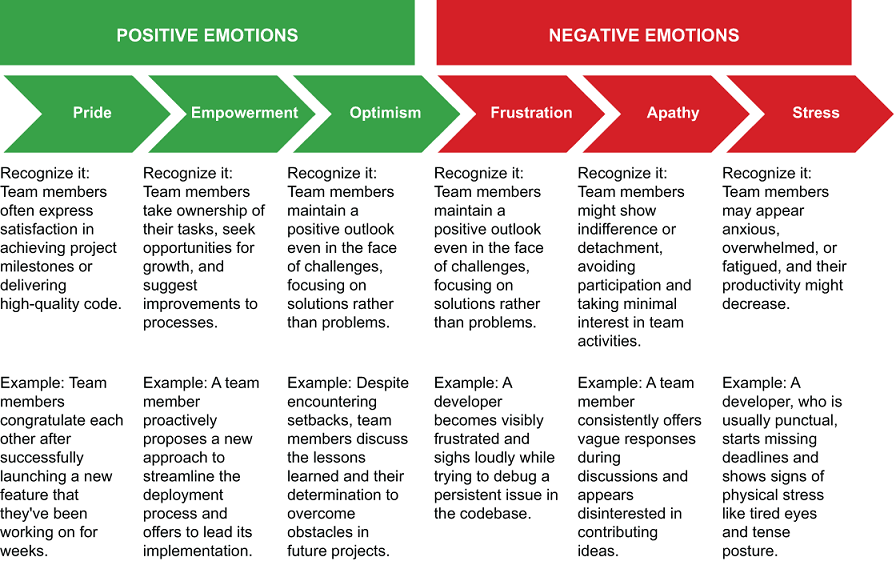
Use the emotion-recognition figure to connect observable positive and negative behaviors with the emotional states that may require regulation. section 11.1.1

How Lead Developer Career Guide covers it

How deep it goes
Defines emotional regulation and its leadership value, but stops short of prescribing a detailed step-by-step regulation method.
Examples
Uses tight deadlines, organizational restructuring, team conflict, and visible signs of positive or negative emotion as examples.
What you can do after
Apply emotional regulation to remain composed, support colleagues, resolve conflict diplomatically, and maintain team harmony.
How it connects
Links self-awareness, empathy, motivation, social skills, communication, conflict resolution, and stress management.

Related concepts

This explainer was generated by Manning's knowledge graph from the text of Lead Developer Career Guide. The section links point to the parts of the book it draws on.