Sensory memory describes multimodal retrieval: finding relevant images, audio, or other non-text data through modality-specific indexes. It is not a separate memory mechanism; it applies the same embed, index, search, and retrieve pattern used for text. section 6.4.1
Figure 6.8 Memory is broken down into various forms, from sensory (visual, auditory, and touch) to short-term conversational memory and long-term episodic, semantic, and implicit/procedural memories
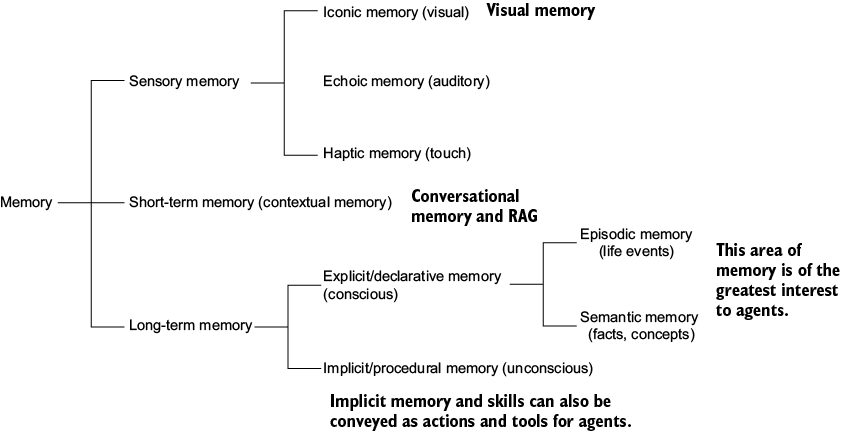
Use the memory taxonomy to contrast sensory inputs with conversational, episodic, semantic, and procedural memory categories. section 6.4.1
A basic sensory-retrieval workflow is:
- Encode an image, audio clip, or query into a modality-appropriate embedding. section 6.4.1
- Store embeddings in a vector-indexed image, audio, or other modality-specific database. section 6.4.1
- Search for similar or relevant items and retrieve them into the agent’s context. section 6.4.1
Similar-image retrieval
Given a current image, an agent searches a vector-indexed store of past images and retrieves the stored image that most resembles it. Audio retrieval follows the same general pattern against a sound database. section 6.4.1
Treat sensory memory as useful when text alone is insufficient, but expect less mature retrieval quality, cross-modal alignment, and tooling than in text retrieval. Production multimodal RAG exists but remains uncommon. section 6.4.1
