Memory
Memory is a storage capability or mechanism for retaining information or computational state for later access or use.
Designing AI Systems
Model-managed memory is a capability in which an AI model selects, stores, and retrieves information from persistent memory outside its immediate context window.
- How it is used
- Preserves selected user facts across turns and sessions without relying on the full conversation history.
- How deep it goes
- Develops the memory data model, tool workflow, scoping, concurrency choices, and integration with context management.
- Examples
- Uses a healthcare assistant saving allergies and medications, and a personal assistant storing travel preferences and project details.
- What you can do after
- Apply model-managed memory via the platform's Session Service and registered memory tools in an assistant workflow.
AI Governance
Agent memory is information retained by an agent for use in later interactions or tasks.
- How it is used
- Carries task context and durable information into later steps or runs so agents can resume work and adapt their strategy.
- How deep it goes
- Distinguishes memory types and gives retention, partitioning, and deletion guidance without specifying a memory-store implementation.
- Examples
- Illustrates memory with patient-monitoring history and health data distributed during appointment booking.
- What you can do after
- Evaluate memory designs for retention, patient isolation, and deletion across stored representations and downstream services.
Build a Multi-Agent System (from Scratch)
Memory is a collection of records from an agent's experiences that can influence its future behavior.
- How it is used
- Gives agents access to past task experiences when processing future tasks.
- How deep it goes
- Implements episodic memory and lifecycle integration, while leaving recall during a task sub-step out of scope.
- Examples
- Uses hailstone sequences to motivate reuse and recency, similarity, and reflection recipes to demonstrate memory designs.
- What you can do after
- Builds episodic memory from scratch and integrates recall and recording into an agent’s task lifecycle.
Read how Build a Multi-Agent System (from Scratch) explains memory →

AI Agents in Action, Second Edition
Agent memory is information retained from prior interactions or external sources that can augment an agent's context.
- How it is used
- Uses memory to carry relevant past interactions and experiences into an agent’s current context.
- How deep it goes
- Explains context, storage, state, and retrieval; gives practical guidance on pruning, search, and access boundaries.
- Examples
- Uses conversation threads, stored user preferences, prior attempts, and working notes to illustrate memory.
- What you can do after
- Operate/configure memory by separating session context from persisted facts, retrieving selectively, pruning, and applying access filters.
Read how AI Agents in Action, Second Edition explains memory →

Introduction to Generative AI, Second Edition
A memory system is a component that stores and retrieves information about users or prior interactions across conversations.
- How it is used
- Uses memory to maintain task context and personalize assistance across interactions.
- How deep it goes
- Explains memory selection and retrieval at a high level, without detailing implementation.
- Examples
- Illustrates selective retention of search results and assistants remembering project details and user preferences.
- What you can do after
- Evaluate memory’s benefits, recall limitations, corruption risks, and implications for user control and emotional well-being.
Read how Introduction to Generative AI, Second Edition explains memory →

AI Agents in Action
Agent memory is a pattern for retaining and retrieving information arising from an agent's interactions with users, itself, and other systems.
- How it is used
- Uses memory to retain agent interactions and retrieve relevant context for later prompts.
- How deep it goes
- Explains memory types, extraction, retrieval, semantic augmentation, and compression, with setup and testing steps for a memory store.
- Examples
- Uses personal facts and preferences in a Nexus memory store and exercises comparing conversational, semantic, episodic, and procedural stores.
- What you can do after
- Operate/configure a Nexus memory store, add personal facts, enable it in chat, and test retrieval.
Context Engineering
Information retained across interactions or steps so an AI system can use it later.
- How it is used
- Provides continuity and personalization across stateless agent calls and sessions.
- How deep it goes
- Explains storage tiers, memory types, retrieval and write flows, and safeguards; leaves identity and conflict handling outside the minimal graph example.
- Examples
- Uses an evening-flight preference, coding-agent project knowledge, and Mem0/Qdrant and Cognee implementations.
- What you can do after
- Applies long-term memory via Mem0 and Qdrant or Cognee, with retrieval and persistence integrated into agent context.

Building Reliable AI Systems
A memory mechanism stores and retrieves information so an AI system can retain context across task steps or interactions.
- How it is used
- Maintains context across interactions and multistep agent workflows.
- How deep it goes
- Explains session and persistent memory, then implements full-history and LLM-based summary patterns with their storage trade-offs.
- Examples
- Uses a travel assistant’s window-seat follow-up and Python message-list and summarization examples.
- What you can do after
- Apply it via LangChain to retain message histories and generate conversation summaries.

AI Agents and Applications
Memory is stored information that an agent or application can retain and use across steps or interactions.
- How it is used
- Maintains conversational context for follow-up questions and stateful agent workflows.
- How deep it goes
- Works through chat-history integration and checkpoint-based state, while deferring system-specific long-term memory implementation.
- Examples
- Uses Roman-history follow-ups and a travel assistant's weather conversation to demonstrate context resolution.
- What you can do after
- Apply it via LangChain chat history and LangGraph checkpoints to support stateful conversations.

Fast Python: High performance techniques for large datasets
- How it is used
- Connects memory hierarchy to data-processing speed and storage efficiency.
- How deep it goes
- Compares hierarchy capacities and latencies and reports matrix timings, while deferring detailed explanation of cache and matrix representation.
- Examples
- Uses NumPy row and column operations and illustrative desktop hierarchy measurements.
- What you can do after
- Evaluate memory-related performance using hierarchy comparisons and hardware-specific timing experiments.
Read how Fast Python: High performance techniques for large datasets explains memory →

Grokking AI Applications
Application memory is persisted conversational or task-related information that a software system can retrieve across interactions.
- How it is used
- Uses application-managed context to overcome the LLM’s statelessness across conversational turns.
- How deep it goes
- Explains statelessness, history capture, and prompt reinjection, then demonstrates a simple list-based implementation.
- Examples
- Demonstrates memory through Andrea’s name, disabled assistant memory, history snippets, and a Python chat loop.
- What you can do after
- Build it from scratch by storing conversation turns and injecting them into each subsequent model prompt.
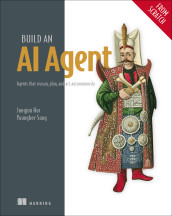
Build an AI Agent (From Scratch)
Agent memory is a mechanism for retaining and retrieving information across an agent's reasoning steps or interactions.
- How it is used
- Adds memory to an agent loop for in-run context control, session continuity, and cross-session knowledge retention.
- How deep it goes
- Implements context reduction, sessions, and vector-backed long-term memory; limits memory conflict handling to add and skip.
- Examples
- Uses prior problem-solving attempts and user profile information to distinguish persistent records from changing facts.
- What you can do after
- Builds from scratch session continuity and long-term memory, including extraction, duplicate checks, storage, and retrieval.
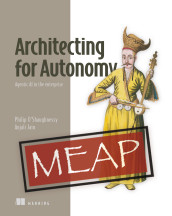
Architecting for Autonomy
A storage system that preserves information for possible retrieval and reuse by an agent across interactions or tasks.
- How it is used
- Governs whether agent-created information persists or is reused across matters.
- How deep it goes
- Distinguishes current-matter notes from persistent memory and identifies lifecycle, access, lineage, reuse, and isolation controls.
- Examples
- Contrasts a current-matter note with persistent memory and considers stale memory after an amended supplier obligation.
- What you can do after
- Configure memory governance with purpose, reuse, retention, access, lineage, and matter-isolation controls.

Modern C
Main memory is the linearly addressable storage that holds a running program's instructions and data.
- How it is used
- Frames C storage behavior within a concrete machine model.
- How deep it goes
- Defines linear addressing and illustrates storage realization through assembler, but defers broader architectural detail.
- Examples
- Uses x86_64 assembler instructions that adjust the stack and load or store values at register-relative memory locations.
- What you can do after
- Evaluate how a simple C function's variables and operations correspond to registers and memory locations.
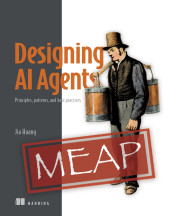
Designing AI Agents
An agent capability for retaining or retrieving information across or within tasks.
- How it is used
- Preserves and retrieves selected state and evidence across decision and handoff boundaries under explicit authority.
- How deep it goes
- Defines retention authority and summarizes four optional patterns, their responsibilities, retrieval choices, and evaluation measures.
- Examples
- Uses a delegated worker handoff and an authoritative team rule in a controlled rollout to illustrate retained context.
- What you can do after
- Evaluate memory designs against downstream decision quality, failure recurrence, latency, and token cost.

AI for Everyday IT
Physical memory is the hardware memory available to a computer system for storing active data and programs.
- How it is used
- Analyzes Oracle database configurations to find instances using more than 75% of available physical memory.
- How deep it goes
- Explains unit conversion and usage formulas, then applies them in a query while stopping short of broader hardware diagnostics.
- Examples
- Uses a configuration query, a row containing 15297 MB, and a CTE that normalizes M and G values.
- What you can do after
- Diagnose memory pressure by querying configurations, converting units, calculating usage, and filtering instances above a utilization threshold.
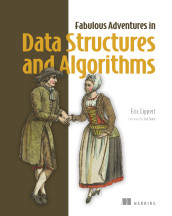
Fabulous Adventures in Data Structures and Algorithms
Memory is computer storage capacity available to hold program data during execution.
- How it is used
- Evaluates representation choices by comparing memory consumption with execution time and search performance.
- How deep it goes
- Calculates asymptotic and approximate byte costs, then stops short of a complete runtime memory model.
- Examples
- Compares Life-cell arrays, packed bits, ENABLE word lists, sorted C# lists, and trie nodes.
- What you can do after
- Evaluate memory–time trade-offs and estimate representation costs for arrays, strings, sorted lists, and tries.
Read how Fabulous Adventures in Data Structures and Algorithms explains memory →

Rust in Action: Systems programming concepts and techniques
RAM is volatile computer memory that stores data and instructions available to a running processor.
- How it is used
- Uses RAM to hold instructions and data for a CHIP-8 CPU, then connects memory to operating-system interaction and thread costs.
- How deep it goes
- Models RAM as a fixed byte array and demonstrates instruction reads and function loading, while broader OS memory behavior is introduced through examples.
- Examples
- Shows a 4 KB CHIP-8 memory array, function bytes loaded at 0x100, and memory demand from threads.
- What you can do after
- Build it from scratch by adding a memory array to a CHIP-8 CPU and loading function opcodes into RAM.
Read how Rust in Action: Systems programming concepts and techniques explains memory →

Build AI-Enhanced Web Apps
A software component or mechanism that retains information from prior interactions so an AI application can use ongoing context.
- How it is used
- Builds context-aware AI applications by retaining conversation history across ongoing interactions.
- How deep it goes
- Explains retrieval, session identifiers, message conversion, memory construction, and invocation, while leaving storage integration application-managed.
- Examples
- Uses session histories, stored messages, and a follow-up question that asks what the user previously asked.
- What you can do after
- Build it from scratch by retrieving messages, constructing ChatMessageHistory and memory, and invoking a ConversationChain.

Machines that Think
The capacity to encode, retain, and retrieve information, including information carried between successive sequence positions.
- How it is used
- Distinguishes human remembering from artificial memory and examines the implications of conversational continuity.
- How deep it goes
- Explains reconstructive recall and fixed parameters, but does not detail how added memory systems are implemented.
- Examples
- Contrasts recall that modifies memory with prompts and corrections that influence a language model within a conversation.
- What you can do after
- Evaluate apparent memory by distinguishing reconstructed experience, fixed parameters, and conversational continuity.

Domain-Specific Small Language Models
State retained over time for a chatbot or agent, including both recent conversational context and more durable stored information.
- How it is used
- Enriches prompts for RAG systems, chatbots, and agents with relevant context from prior interactions.
- How deep it goes
- Defines session and cross-session memory, outlines retrieval mechanisms, and demonstrates a Memoripy workflow.
- Examples
- Demonstrates Memoripy storage, recent-history loading, relevant-interaction retrieval, response generation, and memory updates.
- What you can do after
- Apply Memoripy to retrieve and update conversational memory in language-model applications.
Read how Domain-Specific Small Language Models explains memory →

Build Python Web Apps with Streamlit
Application memory is the transient information retained by a running application while it executes.
- How it is used
- Preserves conversation and application state across reruns or graph invocations so interactive applications can continue prior work.
- How deep it goes
- Explains state loss, in-memory checkpointing, and thread-based recall, while deferring durable database persistence to alternative checkpointers.
- Examples
- Uses a task list, a follow-up chatbot message, MemorySaver, and thread ID 1 as concrete examples.
- What you can do after
- Apply it via LangGraph by compiling a graph with MemorySaver and invoking it with a consistent thread ID.
Read how Build Python Web Apps with Streamlit explains memory →

ScyllaDB in Action
Memory is volatile storage available to a computing instance for holding active program and database state.
- How it is used
- Frames memory as one resource in ScyllaDB cluster planning alongside storage, CPU, networking, and cost.
- How deep it goes
- Identifies memory as a sizing concern but stops short of explaining capacity formulas, allocation, or workload-specific requirements.
- What you can do after
- Evaluate memory as part of a cluster baseline and validate the choice through production-level workload testing.

WordPress Power Toolkit: Harness AI to build next-level websites
AI memory is an AI assistant capability that retains relevant user-provided information for retrieval across future interactions.
- How it is used
- Carries user details into future chats as a time-saving feature alongside custom instructions.
- How deep it goes
- Explains explicit and automatic saving, gives examples of remembered details, and shows how to review or change them.
- Examples
- Uses a book preference, personal-profile details, and prompts such as “Remember this” and “Show me what you remember.”
- What you can do after
- Operate memory by asking GPT to display remembered items, then add, update, or remove them.
Read how WordPress Power Toolkit: Harness AI to build next-level websites explains memory →
Building LLM Applications with DSPy
Stored information about prior interactions or user facts that a chatbot can use in later turns or sessions.
- How it is used
- Maintains interaction history so chatbots can resolve follow-ups and support conversations across queries or sessions.
- How deep it goes
- Shows history passed into a DSPy prediction and appended after a turn, without detailing long-term storage.
- Examples
- Uses subscription cancellation follow-ups, a history-provided answer about water freezing, and questions about favorite food and Spain’s capital.
- What you can do after
- Apply via DSPy’s History class to supply prior exchanges to a prediction and support follow-up questions.
Read how Building LLM Applications with DSPy explains memory →
Build Applications with Local AI Models on a Mac
Storage that holds data and instructions for use by a computer's processor.
- How it is used
- Maintains chatbot context across turns by supplying earlier conversation messages again.
- How deep it goes
- Explains apparent recall through resent history and calls for script-managed conversation loops, without showing implementation details here.
- Examples
- Uses interactive chat, follow-up questions, and a notebook analogy to illustrate how earlier turns are supplied again.
- What you can do after
- Build a back-and-forth chatbot loop that lets the model respond in the context of earlier turns.
Read how Build Applications with Local AI Models on a Mac explains memory →
Also covered in
- A Pythonic Adventure: From Python basics to a working web app
- Spring AI in Action
- Robotics for ProgrammersIn early access (MEAP)
- The Art of AI Product Development
- AI Agents for Offensive SecurityIn early access (MEAP)
- Graph Neural Networks in Action
- LLMs in Production
- Natural Language Processing in Action, Second Edition
- Classic Game Programming on the NES: Make your own retro video game
- Learn Concurrent Programming with Go
- Grokking AI Algorithms, Second Edition
- Latency
What to know first
- language modelA language model is a computational model that represents patterns in linguistic sequences to assign probabilities, predict, generate, or evaluate language.
- AI agentAn AI agent is a computational system that uses artificial intelligence to interpret information and select or perform actions toward goals while interacting with an environment.
- vector databaseA vector database is a data-management system that stores and indexes numerical vector representations and supports retrieval through similarity or distance searches.
- context windowA context window is a bounded span of sequence elements or contextual information that a model or processing operation can consider together.
Related concepts
- working memoryincludes · Working memory is information temporarily retained and available for immediate use during an ongoing task or interaction.
- episodic memoryincludes · Episodic memory is memory of specific past events or experiences together with information about the circumstances in which they occurred.
- cognitive functionkind of · A cognitive function is one of the agent capabilities represented in the framework as perception, memory, reasoning, action, reflection, collaboration, or governance.
- collaborationcontrasts with · Collaboration is the coordinated work of multiple participants who contribute toward a shared goal or outcome.
- statecontrasts with · State is information describing the condition or configuration of a system or computation at a particular time that may influence its behavior or subsequent transitions.
- large language modelcontrasts with · A large language model is a machine-learning model trained on extensive text data to process and generate natural language.
Questions about memory
What is memory?
Memory is a storage capability or mechanism for retaining information or computational state for later access or use.
Which Manning books explain memory?
Designing AI Systems, AI Governance, Build a Multi-Agent System (from Scratch), AI Agents in Action, Second Edition, Introduction to Generative AI, Second Edition, AI Agents in Action, Context Engineering, Building Reliable AI Systems and 18 more.
What should I know before learning memory?
Manning books that teach memory usually introduce language model, AI agent, vector database and context window first.
What is the difference between memory and collaboration?
Memory is a storage capability or mechanism for retaining information or computational state for later access or use. Collaboration is the coordinated work of multiple participants who contribute toward a shared goal or outcome.
What kinds of memory are there?
Kinds of memory include working memory and episodic memory.
What is memory a kind of?
Memory is a kind of cognitive function. A cognitive function is one of the agent capabilities represented in the framework as perception, memory, reasoning, action, reflection, collaboration, or governance.
These guides are generated from the text of Manning books by Manning's knowledge graph and link to the sections they draw on. The full books are available on liveBook and at manning.com.