A sequential agent structure connects multiple specialized agents in a fixed order. One agent receives the request, uses its tools, and passes its output to the next agent, creating a predictable pipeline. section 6.2
Use the pattern when each stage naturally depends on the previous stage:
- Assign each agent a focused role and its own tools. section 6.2
- Pass the first agent’s result directly to the next agent. section 6.2
- Choose the pattern for workflows requiring a fixed order, such as drafting a document and then formatting or reviewing it. section 6.2
- Accept that later agents must wait, giving up the flexibility of conditional delegation. section 6.2
HealthyChef™
A chef agent searches a 1919 Italian cookbook for a recipe matching the user’s request or available ingredients. It passes the result to a dietitian agent, which evaluates the recipe against NHS EatWell guidelines. Retrieval-augmented generation and a vector database support the chef’s search, while the dietitian uses a guidelines-access tool. section 6.3
Figure 6.2 The four types of agentic structures: How would you organize your agents?
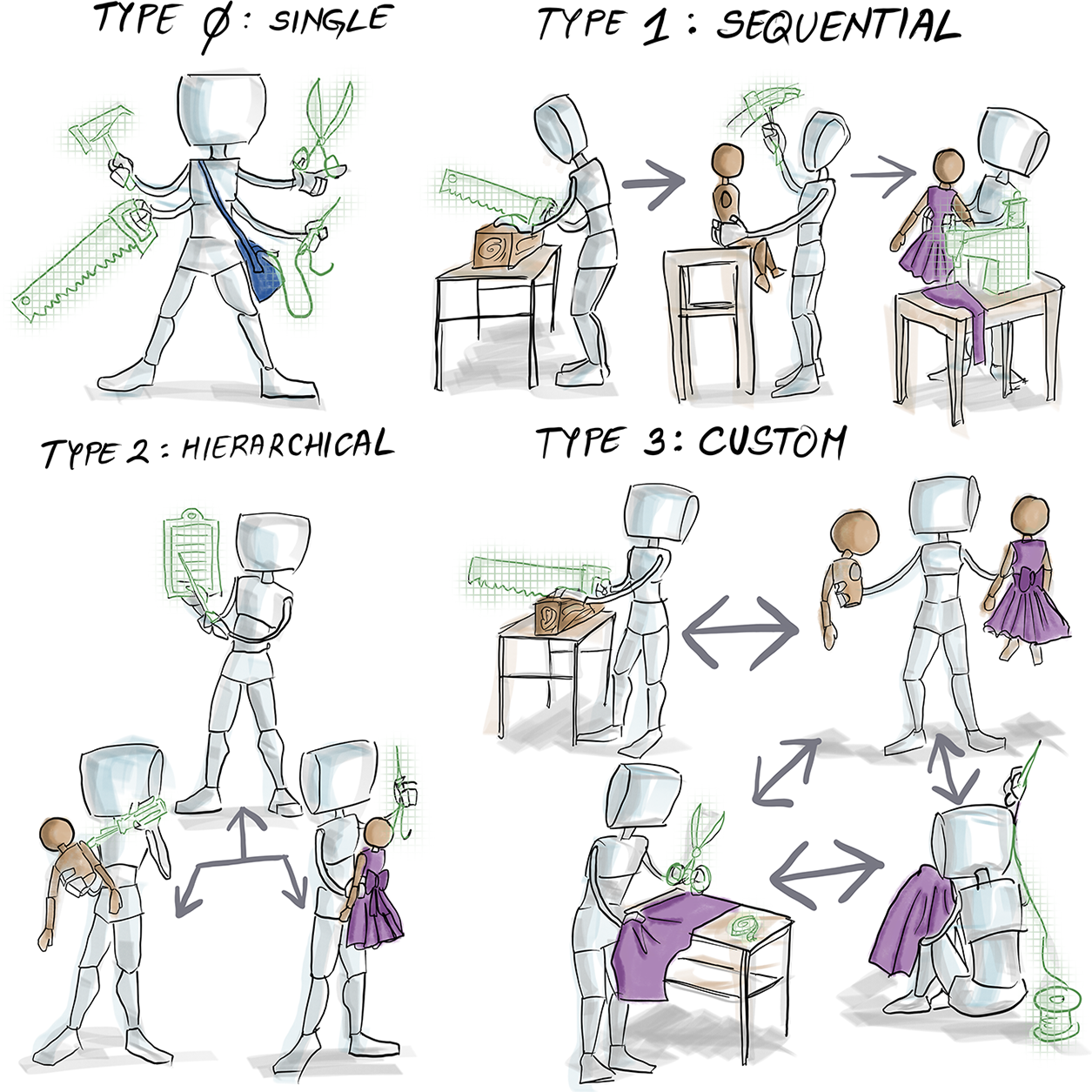
Compare sequential, single, hierarchical, and other agentic structures through an organizational overview. section 6.2
