Stochastic gradient descent (SGD) iteratively adjusts model weights and biases to reduce loss. Each update uses a gradient estimated from an individual example or a small batch, with the learning rate scaling the step. section 8.1.1
Training behavior depends on settings chosen before training:
- Learning rate sets the update size: a rate that is too high can overshoot the minimum, while one that is too low can slow training or get stuck in a local minimum. section 8.1.1
- Batch size sets how many data points contribute to each gradient, affecting convergence stability and speed. section 8.1.1
- More epochs can improve learning, but training too long can cause overfitting; early stopping can interrupt training when validation improvement stalls. section 8.1.1
Figure 8.1 Gradient descent with lr = 0.1, demonstrating faster convergence
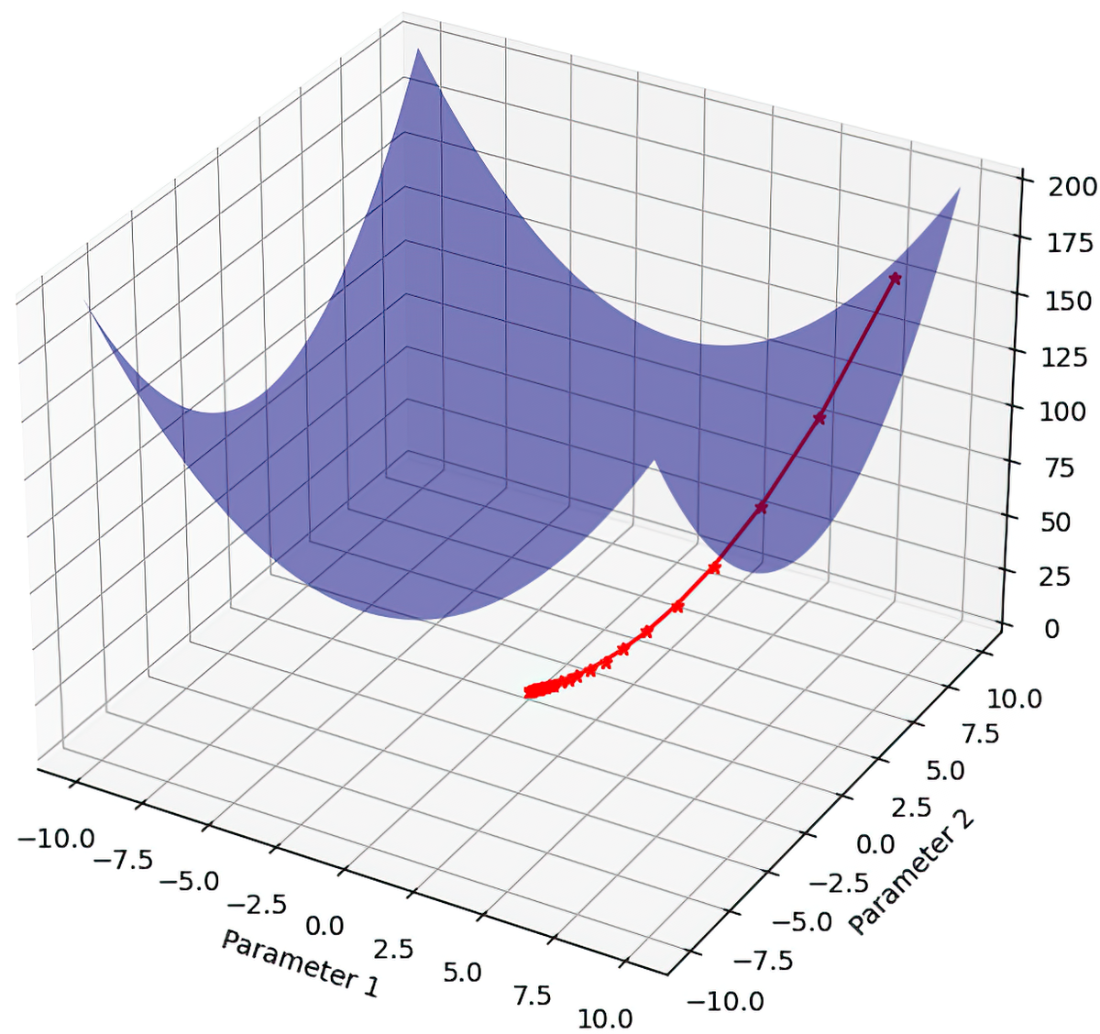
Shows gradient descent with a learning rate of 0.1 and faster convergence. section 8.1.1
Figure 8.2 Gradient descent with lr = 0.01, illustrating stability in convergence
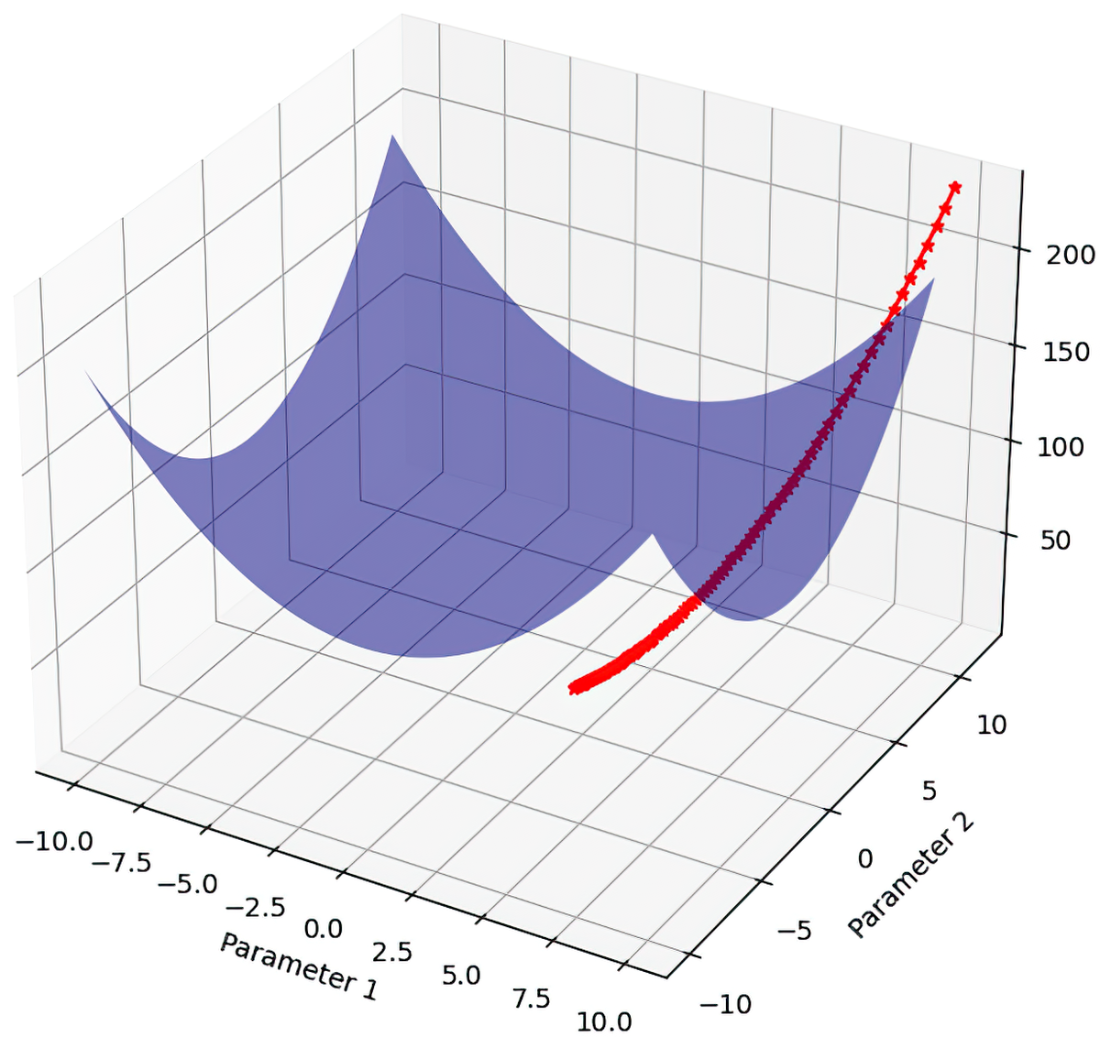
Shows gradient descent with a learning rate of 0.01 and stable convergence. section 8.1.1











