The silver layer turns raw, fragmented data into a consistent working view of important business entities. In a medallion architecture, the bronze layer preserves raw inputs, the silver layer refines them, and the gold layer prepares datasets for direct campaign use or advanced analytics. section 5.3.1 section 5.3.5
Typical silver-layer work includes:
- Cleanse records by removing incomplete data, resolving missing values, and eliminating duplicates. section 5.3.3
- Merge and enrich events with related records, such as linking abandoned carts to CRM profiles and email engagement metrics. section 5.3.3
- Aggregate measures such as average cart value, abandonment frequency, and time-to-purchase. section 5.3.3
- Standardize naming conventions, data types, and date formats, then apply schema validation checks. section 5.3.3
The layer commonly follows an extract, load, transform approach: load raw data first, then transform it into curated tables. These tables support marketing, analytics, and data science teams, while metadata such as timestamps, job IDs, or lineage remains secondary to the clean datasets themselves. section 5.3.3 section 5.5
Abandoned-cart recovery
Raw cart interactions enter the bronze layer, become unified with customer and engagement data in the silver layer, and then feed gold-layer campaign datasets. Analysts can use the refined data to identify recovery patterns or create audiences for activation. section 5.3.1 section 7.6.3
Figure 5.3 Medallion architecture for abandoned cart recovery
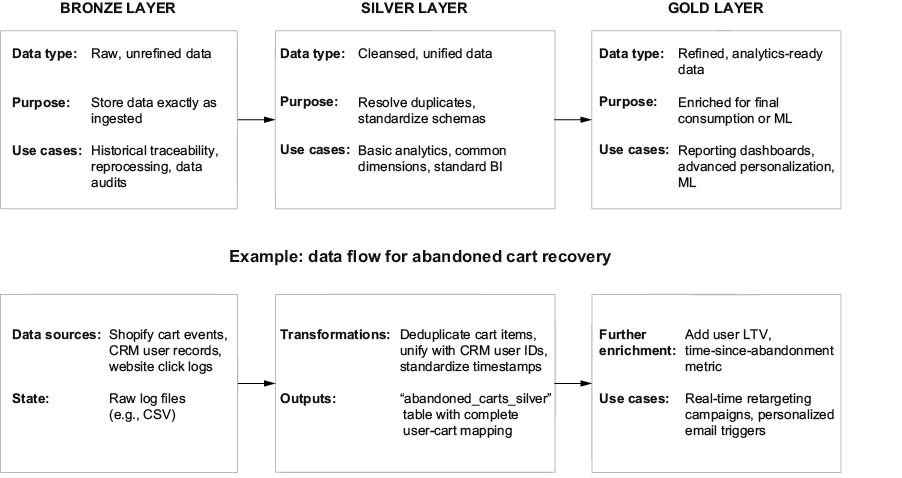
Trace how abandoned-cart interactions move from raw inputs through silver-layer transformation to campaign-ready outputs. section 5.3.1
