A spoofing attack impersonates a legitimate person, organization, device, service, identity, or address so a communication appears trustworthy. The attacker uses that deception to gain unauthorized access, steal data, deliver malware, or persuade users and devices to take harmful actions. section 12.3.5 section 12.13
Common forms of spoofing include:
- Email spoofing forges the sender address so a fraudulent message appears to come from a trusted source. section 12.3.5
- Website spoofing creates a look-alike website that tricks users into entering sensitive information. section 12.3.5
- IP address spoofing forges a packet’s source address to impersonate another device. section 12.3.5
A deceptive message
An attacker sends an email that appears to come from a trusted source, then directs the recipient to a spoofed website. Entered sensitive information can be stolen, and the attacker may continue toward unauthorized access or malware delivery. section 12.3.5
Spoofing is an impersonation threat that can undermine confidentiality, integrity, and availability. A successful spoofing attack can lead to an on-path attack, where the attacker intercepts communications and may alter messages or transactions. Encryption and secure authentication protocols such as HTTPS, TLS, and VPNs help protect communications; verifying website legitimacy and avoiding unsecured public Wi-Fi also reduce risk. section 12.1 section 12.3.6
Figure 12.7 Illustration of an on-path attack scenario.
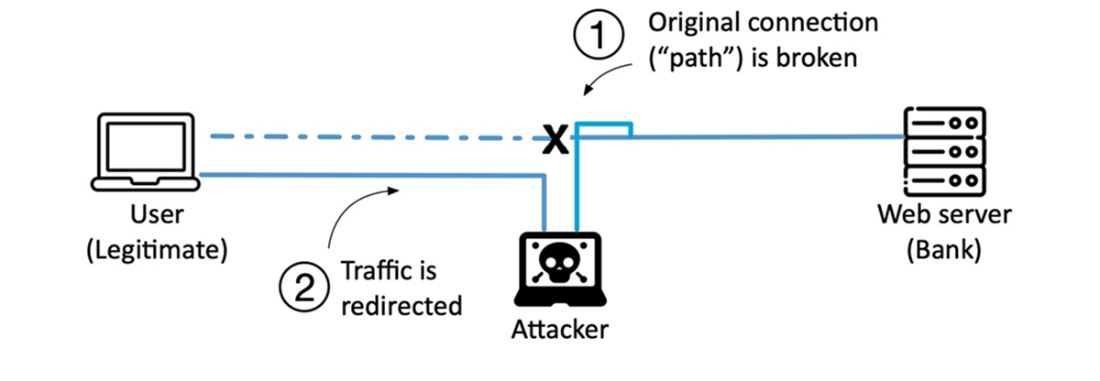
Use the on-path attack illustration to see how impersonation can place an attacker between communicating parties. section 12.3.6


