A stable matching pairs two groups using their preference rankings so no unmatched pair would both prefer each other to their assigned partners. Gale–Shapley addresses this with proposals and rejections: recipients can accept temporarily, then switch when a more-preferred proposal arrives. section 2.0
In a student–university example, universities propose and students compare each offer with their rankings:
- X proposes to Alice, Y to Bob, and Z to Carol—their first choices. section 2.1.1
- The students’ rankings determine whether they keep or reject those proposals; the process continues until the matching is complete. section 2.0 section 2.1.1
Figure 2.1 shows universities proposing their first preferences. X proposes to Alice, Y to Bob, and Z to Carol.
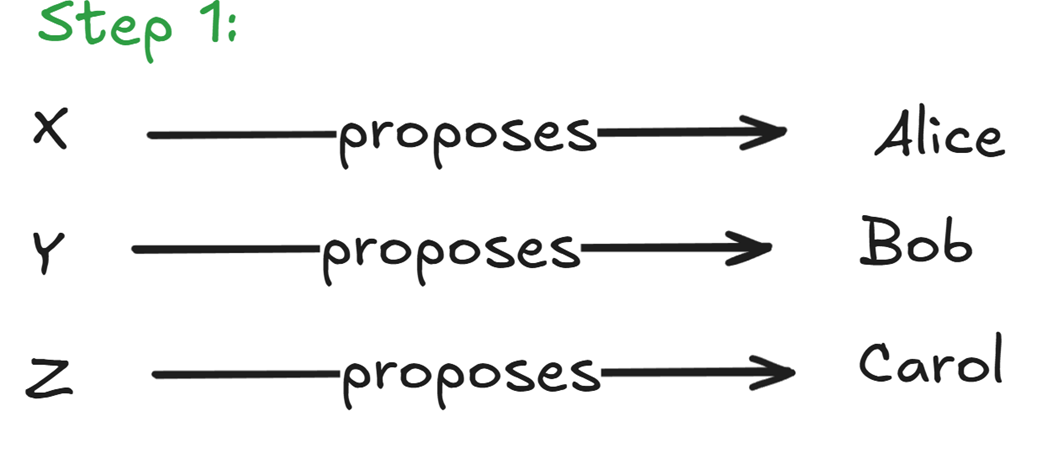
See the initial university proposals to students in the example. section 2.1.1
