A stop-loss order instructs a broker to sell a position automatically when its price reaches a predefined threshold. It acts as a safety net for limiting losses or protecting gains. section 7.1.1
Raising the threshold
After buying at $8, a stock rises to $25. Raising the stop-loss from $7 to $22 keeps the position open while locking in a potential gain if the price falls. section 7.1.1
Evaluate the trade-offs before applying one to every position:
- Taxes may apply when selling a profitable position. section 7.1.1
- Transaction fees and the bid-ask spread can make immediate repurchasing costly. section 7.1.1
- A temporary fluctuation can trigger a sale before the price recovers. section 7.1.1
Figure 7.1 In this reference for a stop-loss order, the stop loss is adjusted to $22 on day 6 after the share price rises. When the stock goes below $22, the stop loss will be triggered, and the investor will sell at a market price on day 9.
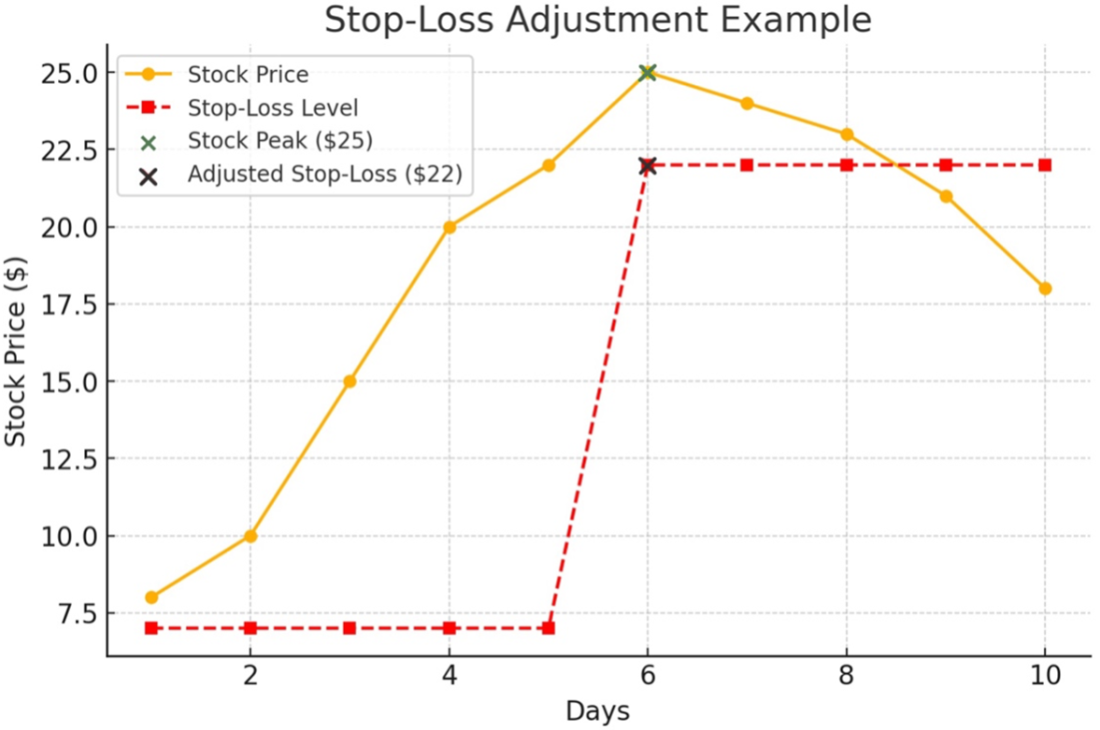
Trace the price rise, threshold adjustment to $22, trigger, and market-price sale. section 7.1.1
