Strategy and Policy is the top level of the 6L-G governance model. It sets organizational direction and defines boundaries, leadership, accountability, and oversight before teams make AI-specific design or deployment choices. section 1.3
Make the organization’s AI rules operational by defining:
- Which AI uses are prohibited, which require formal approval, and who may approve exceptions. section 3.2
- Approved tools, named owners, human-oversight requirements, and review paths for high-risk initiatives. section 3.2 section 1.3
- A governance charter, responsible-AI principles, executive sponsorship, and legal and ethical boundaries. section 1.3
MediAssist patient chatbot
Before a chatbot speaks directly to patients, reads medical records, or routes urgent cases to clinicians or emergency services, policy should require review and a named owner. The policy sets these conditions; it does not specify exactly when emergency services should be contacted. section 3.2
Without concrete policy, teams may use unauthorized tools with customer data or launch sensitive AI features without review. Clinical rules, tests, logs, and handoff procedures belong to later controls. section 3.2
Figure 1.4 Six Levels of Generative AI Governance. Chapter 2 will expand into what control tasks attach to each checkpoint.
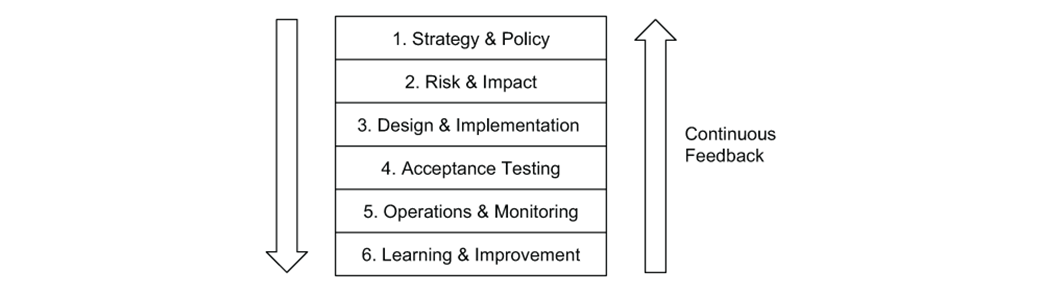
Use the six-level model to locate Strategy and Policy among the governance checkpoints tied to an AI system’s evolution. section 1.3
