The Strategy Cycle is an iterative visual framework for moving from organizational purpose to strategic action. It examines five connected concerns: purpose, landscape, climate, doctrine, and leadership. section 5.1 section 5.6
Use the five parts to structure strategic inquiry:
- Purpose defines the organization’s ultimate ambition or mission. section 5.1 section 5.6
- Landscape identifies strategically relevant products, services, capabilities, practices, competitors, and their relationships. section 5.1 section 5.6
- Climate examines external forces that change the landscape. section 5.6
- Doctrine considers whether the organization is set up to execute its strategy effectively. section 5.5 section 5.6
- Leadership makes choices about how to change the landscape, prioritize investment, and gain advantage. section 5.5 section 5.6
A purpose-led mapping workshop
Begin by defining the purpose, setting the map’s scope, identifying relevant users, articulating their needs, constructing value chains, and placing components according to their stage of evolution. A listening tour can compare how stakeholders describe the organization’s purpose and reveal divergence or convergence. Example ambitions include improving cancer care, building financial resilience, or reducing carbon emissions. section 5.1 section 5.6
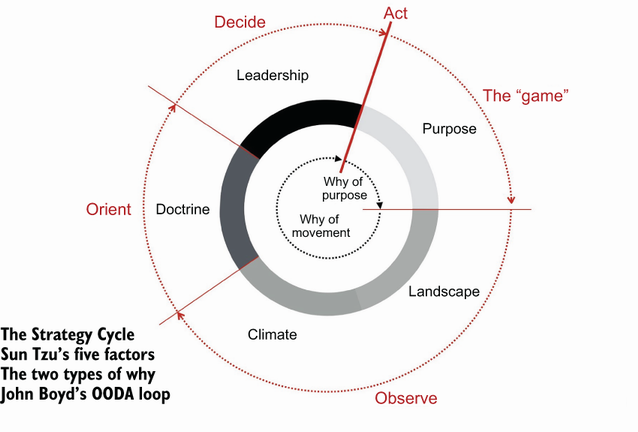
Use the visual cycle to navigate the progression from purpose and landscape through climate and doctrine to leadership decisions. section 5.1
