Landscape captures the products, services, capabilities, practices, competitors, and other relationships that shape an organization’s strategic situation. section 5.1 section 5.6
Use it as the second step of the Strategy Cycle: understand the current landscape before considering external forces, organizational doctrine, or leadership decisions. section 5.1 section 5.6
Construct a landscape map progressively:
- Define the purpose and scope of the map. section 5.6
- Identify relevant users and articulate each user’s needs. section 5.6
- Construct value chains from components serving each need. section 5.6
- Place components on an evolutionary map: genesis, custom built, product, or commodity. section 5.6
Modernization landscape
A collaborative mapping exercise can expose strategic risks such as having no future differentiators or investing heavily in components that cannot create advantage. section 5.6
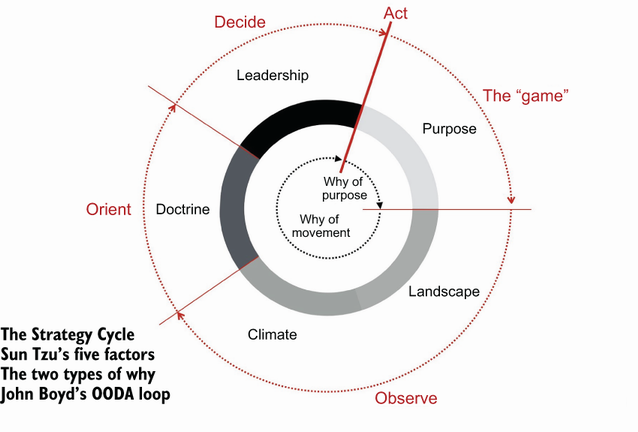
Use the Strategy Cycle visual to connect landscape mapping with purpose, climate, doctrine, and leadership. section 5.1
