What changes when someone knows where you are? Surveillance is systematic observation or monitoring that can shape behavior even when the watcher is a spouse, company, or government. Awareness of being watched can encourage self-censorship, suspicion, and reluctance to try unfamiliar ideas. section 2.4 section 3.4
A tracked shopping trip
A location-sharing app reports each stop to a spouse: a pharmacy, a mall, and an electronics store. The watcher’s reminders and visibility alter the shopper’s choices; a desired purchase is abandoned, and the shopper regrets not disabling location services. The example shows that surveillance does not need to be secret or governmental to influence everyday decisions. section 2.4
Most people now expect companies and governments to collect data about their online and offline activities. Organizations seek recent, accurate information to improve products, services, pricing, research, and profitability, while people generally resist coercion, manipulation, monitoring, and clandestine surveillance. The issue is therefore not only whether data is collected, but who receives it and on what terms. section 3.4
Practical boundaries remain imperfect:
- Location services can be turned off, but doing so may come only after tracking has already influenced a decision. section 2.4
- Incognito mode may prevent activity from being saved on a browser or device without preventing all tracking. section 5.13
- App settings may reduce logged data while leaving companies with substantial information and incentives to retain it. section 5.13
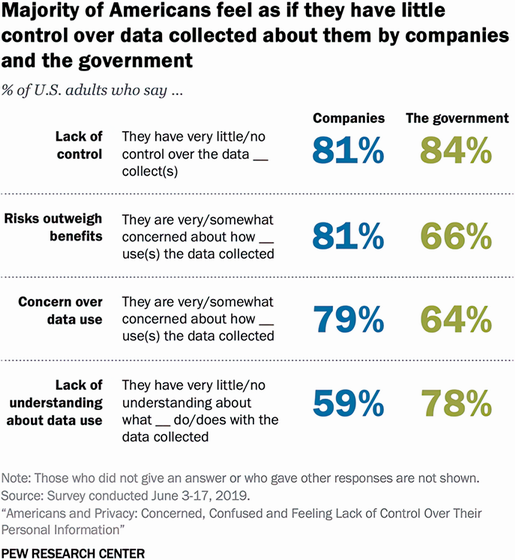
Use the figure to examine public views and attitudes toward data collection. section 3.4
