liveBook · Manning

Task success metric

As explained in Natural Language Processing in Action, Second Edition

A task success metric measures how effectively users accomplish the intended goals of an application or conversational system.

A task success metric measures whether users accomplish an intended goal, rather than merely signing up or spending time in a chatbot. For an educational chatbot, the central question is whether students master the targeted skills. section 12.7.3

Useful measures include:

  • Summative assessment: automatically graded quizzes or tests that measure students’ abilities. section 12.7.3
  • Formative assessment: questions embedded in lessons to measure progress during learning. section 12.7.3
  • Lesson outcomes: completion percentage, time per lesson, partial progress, and correct use of mathematical terms. section 12.7.3

Math tutor chatbot

Evaluate success by tracking whether students complete lessons, improve their skills, solve math riddles, or use mathematical expressions correctly—not only by counting sessions or questions. section 12.7.3

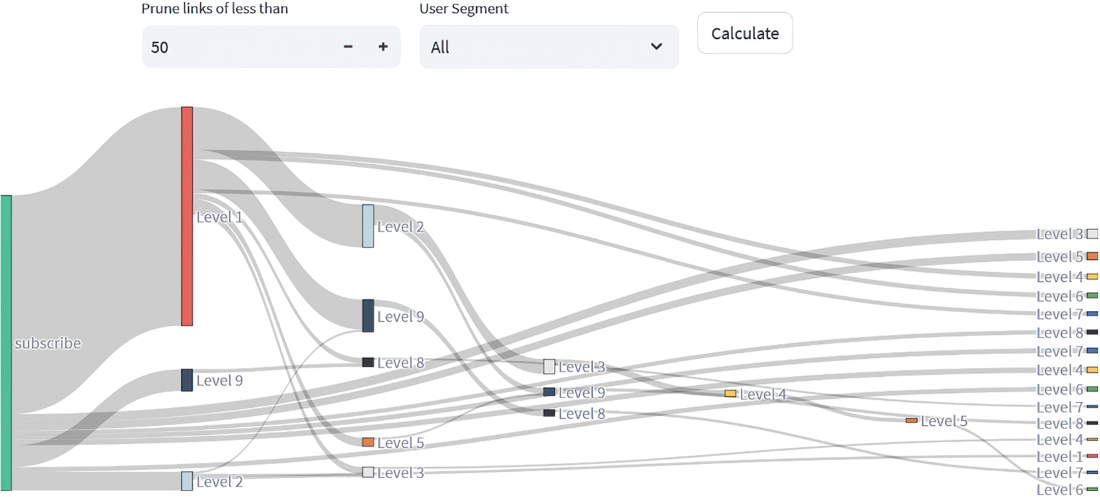
Figure 12.7 Sankey diagram of lesson funnels
figure

Use the lesson-funnel Sankey diagram to inspect where learners complete or abandon educational chatbot flows. section 12.7.3

How Natural Language Processing in Action, Second Edition covers it

How deep it goes
Defines the metric and develops it through summative, formative, completion, timing, progress, and conversational assessment examples.
Examples
Uses math tutor lessons, quizzes, flashcards, riddles, jokes, lesson funnels, and correct mathematical language as examples.
What it assumes
Assumes measurable user goals and chatbot interactions; teaches task success through educational assessment examples.
What you can do after
Evaluate chatbot effectiveness by selecting measures that reveal learning, completion, progress, or successful task performance.
How it connects
Connects task success metrics with adoption metrics, engagement metrics, formative assessment, summative assessment, and learning engineering.

Related concepts

This explainer was generated by Manning's knowledge graph from the text of Natural Language Processing in Action, Second Edition. The section links point to the parts of the book it draws on.