liveBook · Manning

Team context

As explained in Decision Engineering

The experience, capabilities, and interpersonal dynamics of the people who will own a result.

Team context is the experience, capabilities, and interpersonal dynamics of the people who will own a result. It shapes how a decision is received and carried out, and can constrain which options are realistic. section 3.0 section 3.5

Consider which team forces matter for the decision:

  • Operational capability and on-call structure. section 3.5
  • The available talent pool and the team’s experience with recent change. section 3.5
  • Cultural and motivational dynamics that shape how a decision is received and executed. section 3.0

Not every force matters equally in every decision. Identify the ones that actually affect the choice rather than treating every dimension as a score to complete. section 3.5

Figure 3.1 Decisions context composition – system, company, team context.
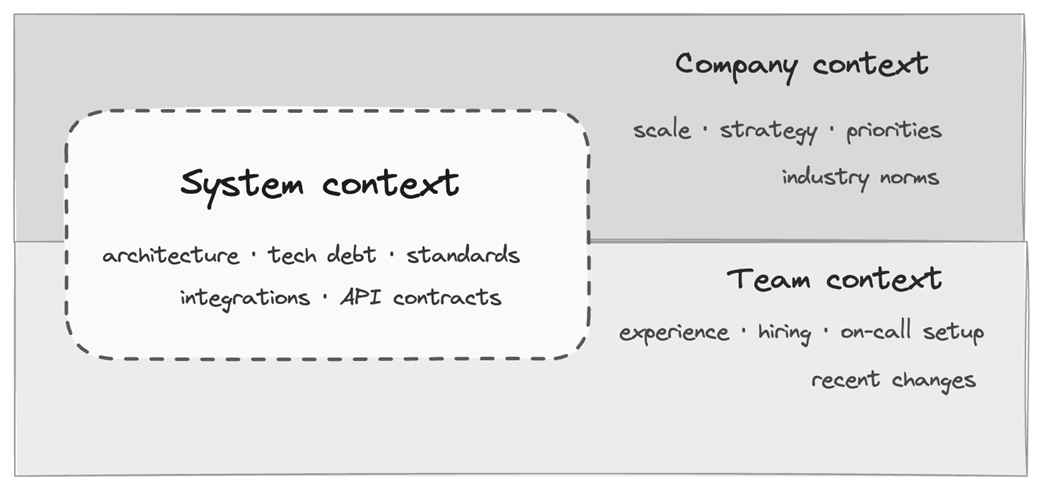
Situates team context alongside system context and company context as dimensions of decision context. section 3.0

How Decision Engineering covers it

How deep it goes
Identifies team forces that can bind a decision without prescribing a scoring method.
Examples
Names operational capability, on-call structure, talent pool, and recent change experience as relevant forces.
What it assumes
Assumes requirements and constraints have been identified before context completes decision framing.
What you can do after
Evaluate which team forces materially shape how a decision will be received and executed.
How it connects
Connects team context with system context and company context as dimensions of decision context.

Related concepts

This explainer was generated by Manning's knowledge graph from the text of Decision Engineering. The section links point to the parts of the book it draws on.