A technical approach describes how a development team proposes to solve a client’s problem. It turns business and technical requirements into a plan the team can estimate and the client can assess. A lead developer forms it with input from stakeholders and developers, then presents it to the project team. section 1.2 section 8.2
Build the approach through conversation, not in isolation:
- Gather business and technical requirements, including the development team’s feedback. Confirm your understanding of the client’s problem before proposing a solution. section 1.2 section 8.2.3
- Identify essential features and weigh them against the client’s budget. Explain why work that supports other features may need to come first. section 8.2.2
- Work with the team on project estimates, then refine them after presenting the approach and gathering more feedback. section 1.2
- Make risks, third-party costs, cross-team needs, data dependencies, and unknowns visible rather than presenting the plan as certain. section 8.5.3
Prioritizing an e-commerce project
A secure payment gateway is essential to an e-commerce site. Inventory management may also need attention before a user-friendly checkout can work well, even if the client first asks for search or product recommendations. Explain the supporting work as a foundation, then discuss what the budget allows. section 8.2.2
Present the approach in the client’s terms: restate the problem, describe the proposed solution and its benefits, and use simple language. Diagrams, flowcharts, or short demos can show how parts interact. Prepare for questions about feasibility, scalability, and risk. Check for existing client ideas first; overlooking a client’s technical expert can turn a presentation into a discussion of missed requirements. section 8.2.3 section 8.5.3
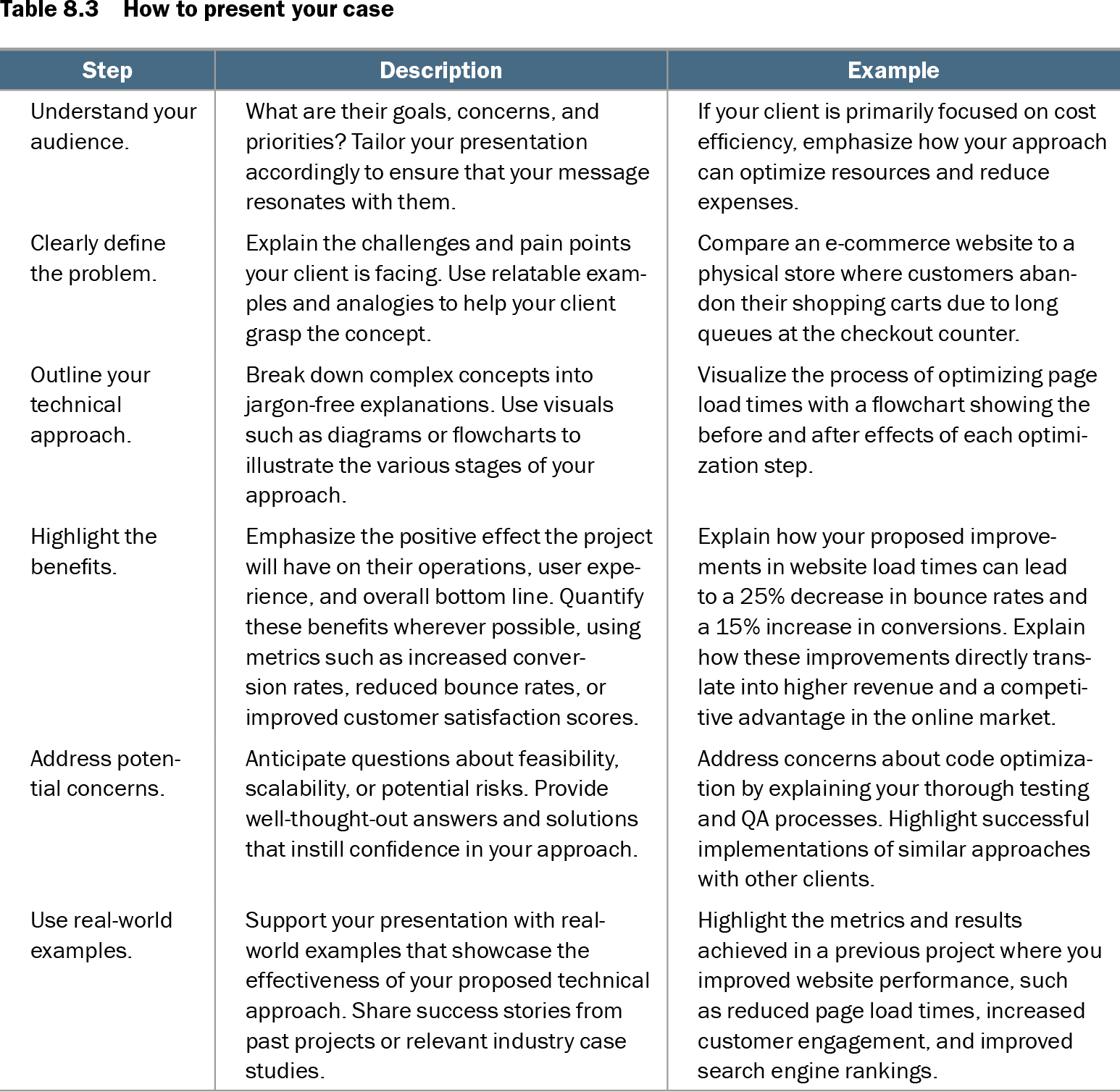
Table 8.3 How to present your case (view table figure)
| Step |
Description |
Example |
|---|---|---|
| Understand your audience. |
What are their goals, concerns, and priorities? Tailor your presentation accordingly to ensure that your message resonates with them. |
If your client is primarily focused on cost efficiency, emphasize how your approach can optimize resources and reduce expenses. |
| Clearly define the problem. |
Explain the challenges and pain points your client is facing. Use relatable examples and analogies to help your client grasp the concept. |
Compare an e-commerce website to a physical store where customers abandon their shopping carts due to long queues at the checkout counter. |
| Outline your technical approach. |
Break down complex concepts into jargon-free explanations. Use visuals such as diagrams or flowcharts to illustrate the various stages of your approach. |
Visualize the process of optimizing page load times with a flowchart showing the before and after effects of each optimization step. |
| Highlight the benefits. |
Emphasize the positive effect the project will have on their operations, user experience, and overall bottom line. Quantify these benefits wherever possible, using metrics such as increased conversion rates, reduced bounce rates, or improved customer satisfaction scores. |
Explain how your proposed improvements in website load times can lead to a 25% decrease in bounce rates and a 15% increase in conversions. Explain how these improvements directly translate into higher revenue and a competitive advantage in the online market. |
| Address potential concerns. |
Anticipate questions about feasibility, scalability, or potential risks. Provide well-thought-out answers and solutions that instill confidence in your approach. |
Address concerns about code optimization by explaining your thorough testing and QA processes. Highlight successful implementations of similar approaches with other clients. |
| Use real-world examples. |
Support your presentation with real-world examples that showcase the effectiveness of your proposed technical approach. Share success stories from past projects or relevant industry case studies. |
Highlight the metrics and results achieved in a previous project where you improved website performance, such as reduced page load times, increased customer engagement, and improved search engine rankings. |
Use the presentation table as a quick check: understand the audience, define the problem, and outline the approach without unnecessary jargon. section 8.2.3
A useful technical approach gives the team a basis for estimates and gives the client a clear reason to trust the proposed work. Keep revisiting it as feedback changes what the team knows. section 1.2 section 8.2