A technology vision describes how technology will help an organization deliver future value. A CTO may be responsible for both the vision and its execution, although the role varies by organization. The vision should do more than name a technology upgrade: it should explain what employees, clients, or the business will gain. section 1.0 section 3.1.1
Keep the statement simple enough for people to remember, then distinguish its “what and why” from its “how.” The first part makes the benefit clear to board members, investors, clients, and colleagues. The second gives the technical group enough direction to act. Test decisions about hiring, vendors, and the technology stack by asking whether they move the organization closer to that direction. If the team cannot see how its work supports the vision, clarify the plan before trying to sell it more widely. section 3.1.1 section 3.1.2
Make the benefit visible
A company moving away from legacy, call-staff-dependent claims handling could use “a self-driven, customer data–centric platform” as its vision statement. By contrast, “integrating machine learning into our analysis” is not enough on its own: without a client benefit, business reason, or delivery plan, a fashionable technology leaves the team without a problem to solve. section 3.1.1 section 3.1.2
A vision is usually a multiyear, multiproject undertaking, not a project that finishes in a few months. Define smaller deliverables and unambiguous success criteria so progress is visible well before the end. Plan around the organization’s capacity to fund and support the work, seasonal periods when changes are risky, the people needed to deliver it, and the need to keep existing systems running. Allow the plan to adapt as technology changes. section 3.1.3 section 3.3 section 3.3.1 section 3.3.2
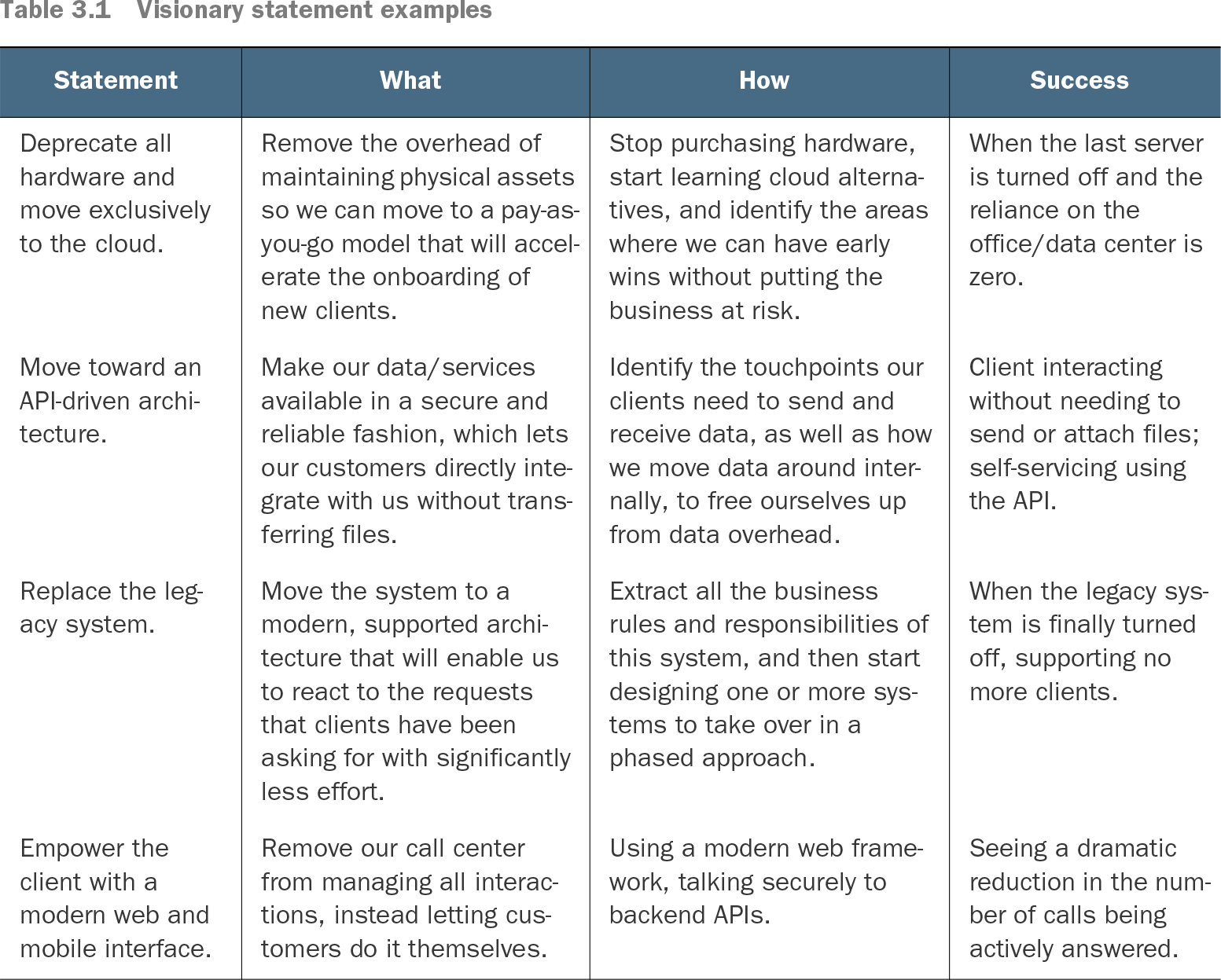
Table 3.1 Visionary statement examples (view table figure)
Compare sample vision statements by what they aim to achieve, how work would begin, and what would count as success. section 3.1.3
Before asking others to commit, check the plan and the pitch:
- Name the problem, the client or business benefit, and success measures the business would recognize. section 3.3.2
- Set out a timeline with interim deliverables, resource and continuity implications, and a budget; do not promise an uninterrupted path to a distant result. section 3.3.1 section 3.3.2 section 3.8
- Prepare technical and nontechnical versions of the pitch, practice a short explanation, and be ready to report progress to different audiences. section 3.5.1 section 3.9