liveBook · Manning

Template engine

As explained in Platform Engineering on Kubernetes

A templating engine is software that generates concrete configuration files by substituting parameters into reusable resource definitions.

A templating engine generates rendered Kubernetes resources by replacing variables in reusable YAML definitions. It lets teams use different parameters for different environments without maintaining duplicate files. section 2.1.2

Template engines address practical application-packaging problems:

  • Reuse one resource definition across testing and production environments. section 2.1.2
  • Replace environment-specific values such as database URLs during rendering. section 2.1.2
  • Reduce the maintenance burden caused by accumulating near-duplicate YAML files. section 2.1.2
  • Consider Kubernetes-focused or YAML-focused tools such as Kustomize and Carvel YTT alongside package managers. section 2.1.2
Figure 2.2 Templating engines render YAML resources by replacing variables.
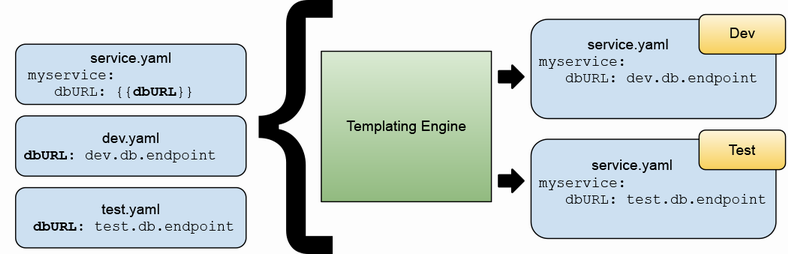
Visualizes how variables become concrete YAML resources through rendering. section 2.1.2


How Platform Engineering on Kubernetes covers it

How deep it goes
Explains variable substitution and maintenance benefits but stops short of detailed resource implementation or command examples.
Examples
Uses testing and production database URLs as the central example of environment-specific rendering.
What you can do after
Evaluate templating tools for reducing duplicated Kubernetes configuration across environments.
How it connects
Connects Kubernetes, YAML, environments, database URLs, and package managers.

Also explained in

Compare how 5 books explain template engine →

Related concepts

This explainer was generated by Manning's knowledge graph from the text of Platform Engineering on Kubernetes. The section links point to the parts of the book it draws on.


