liveBook · Manning

Tertiary color

As explained in Design for Developers

A tertiary color is a color produced by mixing a primary color with an adjacent color on the color wheel.

A tertiary color mixes one primary color with an adjacent color on the color wheel. These in-between colors include red-orange (amber) and blue-green (teal). section 9.2.1

The color wheel helps identify tertiary colors and understand how they relate to primary and secondary colors when building a palette. section 9.2.1

Reading the color wheel

Locate a primary color, then move to a neighboring color on the wheel. Mixing the two produces a tertiary color such as red-orange or blue-green. section 9.2.1
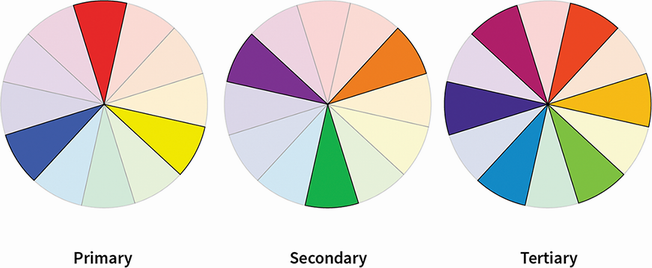
Figure 9.8 The color wheel is divided to show primary, secondary, and tertiary colors.

Use the color-wheel figure to compare the positions of primary, secondary, and tertiary colors. section 9.2.1

How Design for Developers covers it

How deep it goes
Defines tertiary colors, relates them to primary and secondary colors, and illustrates them with concrete examples.
Examples
Uses red-orange (amber) and blue-green (teal) as examples of tertiary colors.
What it assumes
Builds from primary and secondary colors before defining tertiary colors.
What you can do after
Evaluate/understand tertiary colors by locating primary-adjacent mixtures on a color wheel.
How it connects
Connects tertiary colors with the color wheel, primary colors, secondary colors, and color relationships.

Related concepts

This explainer was generated by Manning's knowledge graph from the text of Design for Developers. The section links point to the parts of the book it draws on.