Text-to-speech (TTS) converts a chatbot’s written response into synthetic spoken audio, enabling hands-free conversations and voice-first interfaces. section 12.7.4
A practical voice-assistant pipeline connects several stages:
- Preprocess spoken input with speech-to-text software. section 12.7.4
- Let the chatbot or dialog engine interpret the text and produce a response. section 12.7.4
- Pass the response to TTS software for a synthetic voice output. section 12.7.4
Realistic speech and an appropriate tone can be difficult to generate, so high-quality output may require a commercial service. OpenTTS supports self-hosting, while Hugging Face SpeechT5 offers another software option. The voice layer makes interaction feel human, but the system’s understanding comes from the underlying NLP rather than the speech wrapper. section 12.7.4
Figure 12.8 Giving your chatbot a voice
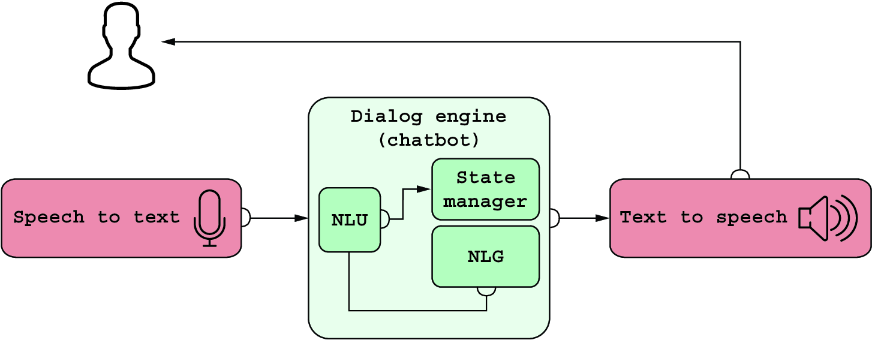
Use the pipeline diagram to trace how spoken input becomes chatbot output and then synthesized speech. section 12.7.4



