A security threat is a potential occurrence that can damage or compromise a business asset or objective. For APIs, threat analysis supports protection against vulnerabilities across design, development, testing, and runtime operation. section 10.2.1
Threat modeling identifies possible threats, estimates their likelihood and impact, and selects security controls and countermeasures. Risk depends on both dimensions: a low-probability, high-impact event may outweigh a frequent event with limited impact. section 10.2.1
Keep these threat-modeling terms distinct:
- Vulnerability: a weakness in system implementation that makes exploitation possible. section 10.2.1
- Attack: an attempt to steal, expose, modify, destroy, disable, or gain unauthorized access to a system or asset. section 10.2.1
- Attack vector: the channel used to carry out an attack, such as a client browser or network proxy. section 10.2.1
- Countermeasure: an action that reduces vulnerability, attack probability, or threat impact. section 10.2.1
API security controls
API protection can combine encryption, authentication, authorization, audit logging, and rate-limiting. These controls address different aspects of exposure and should be considered throughout the software delivery life cycle. section 10.2.1
Figure 10.4 The main stages of threat modeling
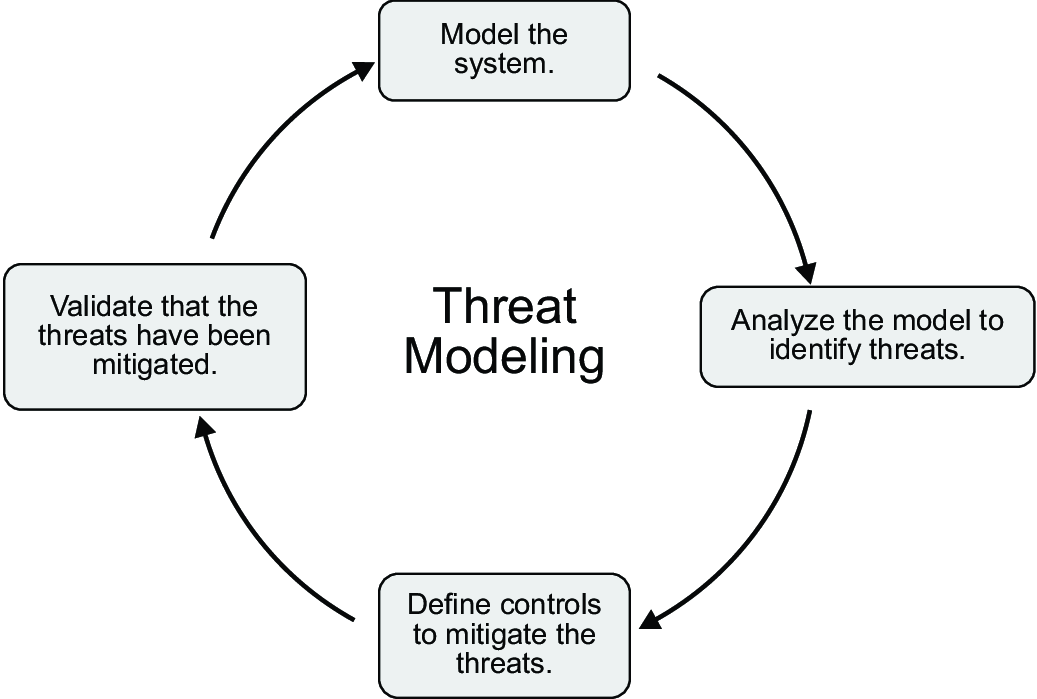
Use the threat-modeling stages diagram to navigate the process of identifying threats, assessing risk, and choosing controls. section 10.2.1


