A threat-hunting framework organizes the practices, processes, roles, resources, systems, triggers, and outcomes needed to manage structured, hypothesis-driven hunts rather than only alert-driven investigations. section 2.0 section 2.7.1
A practical framework defines:
- Process phases: preparation, execution, and communication. section 2.7.1
- Roles: threat-intelligence analyst, threat hunter, incident response team, and platform engineer. section 2.7.1
- Resources and systems for hunt plays, reporting, event correlation, endpoint queries, network flows, packet capture, sandboxing, intelligence, and case management. section 2.7.1
- Triggers such as threat intelligence, threat modeling, red or purple team exercises, and lessons from past incidents. section 2.7.1
- Exit criteria for unavailable data, a proven hypothesis requiring incident response, or a hunt that finds no threat. section 2.7.1
Hypothesis-driven hunt
A hunt begins with a what-if question and an initial lead or clue. The hunter prepares the investigation, executes queries and other checks, optimizes the hunt, communicates results, and hands a proven incident to incident response. section 2.7.1
Figure 2.6 High-level threat-hunting process
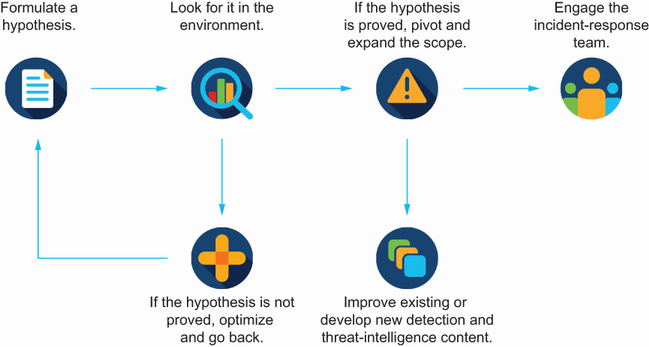
Use the high-level process figure to navigate the relationship between preparation, execution, and communication. section 2.7.1
