liveBook · Manning

Time-series model

As explained in Effective Data Analysis

A time series model uses observations ordered over time to estimate or predict future values while accounting for temporal patterns.

A time-series model uses historical observations ordered over time to estimate values in future periods. It accounts for temporal patterns such as seasonality, overall trends, and recent trends. section 9.1.1

Forecasting questions can include:

  • What will a city’s daily electricity consumption be over the next seven days? section 9.1.1
  • What will a store’s weekly sales be, considering upcoming holidays? section 9.1.1
  • How many hospitalizations for a disease might occur in the coming season? section 9.1.1

Forecasting requires accounting for seasonality, trend, and noise. ARIMA and Holt-Winters are examples of methods that can identify and adjust for trends. section 9.1.1

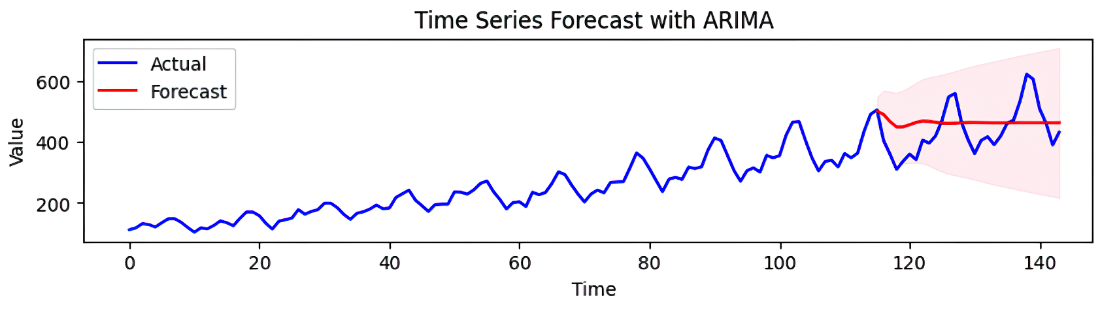
Figure 9.5 Time series models look for patterns in data captured over time to predict future values.
figure

A visual overview of how patterns in observations over time support forecasts. section 9.1.1

How Effective Data Analysis covers it

How deep it goes
Identifies seasonality, trend, and noise as forecasting components, but does not detail model fitting.
Examples
Uses examples of electricity consumption, holiday-aware retail sales, hospitalizations, and revenue forecasts.
What you can do after
Apply it to forecast values for future periods, such as daily electricity use or weekly sales.
How it connects
Links forecasting to seasonality, trend, noise, ARIMA, and Holt-Winters.

Also explained in

Compare how 2 books explain time-series model →

Related concepts

This explainer was generated by Manning's knowledge graph from the text of Effective Data Analysis. The section links point to the parts of the book it draws on.
