A timeout is a configured interval after which the absence of an expected signal is treated as a failure. In Kafka, timeouts help detect inactivity, failed brokers, and unresponsive consumers, but overly aggressive values can create instability. section 4.3.3 section 1.3.2
Consumer timeout settings address different operational risks:
- Tune max.poll.interval.ms and max.poll.records when processing includes long-running external calls or file generation, reducing unnecessary rebalances. section 4.3.3
- Balance heartbeat.interval.ms and session.timeout.ms to detect failed consumers promptly without destabilizing the consumer group. section 4.3.3
- Benchmark workloads before setting values, because poor choices can cause rebalances, processing bottlenecks, or additional cluster strain. section 4.3.3
Broker failure detection
KRaft brokers send heartbeat messages to the active controller. If a broker misses the defined timeout, the controller considers it failed and may remove it from the cluster. section 1.3.2
Figure 1.4 Structure of a Kafka cluster: brokers handle client traffic; KRaft controllers manage metadata and coordination.
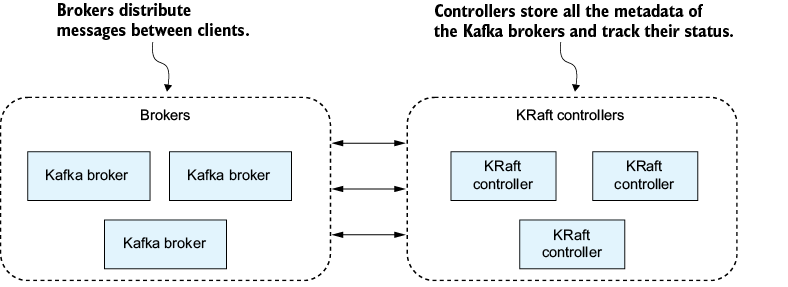
Use the cluster diagram to distinguish broker client traffic from KRaft controller coordination and heartbeat-based failure detection. section 1.3.2








