A tool result is structured output returned after a tool call and appended to the conversation history. The model receives it on the next iteration, using the observation to answer, call another tool, or adjust its action. section 10.6
Tool results support the agent loop by:
- Returning structured errors instead of throwing, allowing the model to explain failures or try alternatives. section 10.6
- Carrying outputs from multi-step actions such as knowledge search, calendar creation, and ticket creation into later iterations. section 10.6
- Keeping reasoning bounded by a maximum iteration count, limiting indefinite calls, unwanted actions, and API costs. section 10.6
Calendar conflict
A scheduling tool returns a structured calendar-conflict result. The agent receives that result in its next iteration and can explain the conflict or propose alternative times. section 10.6
Figure 10.6 Adding tools and the agent loop. The Tool Service connects Claw to external systems, and the agent loop lets it reason, act, observe, and continue.
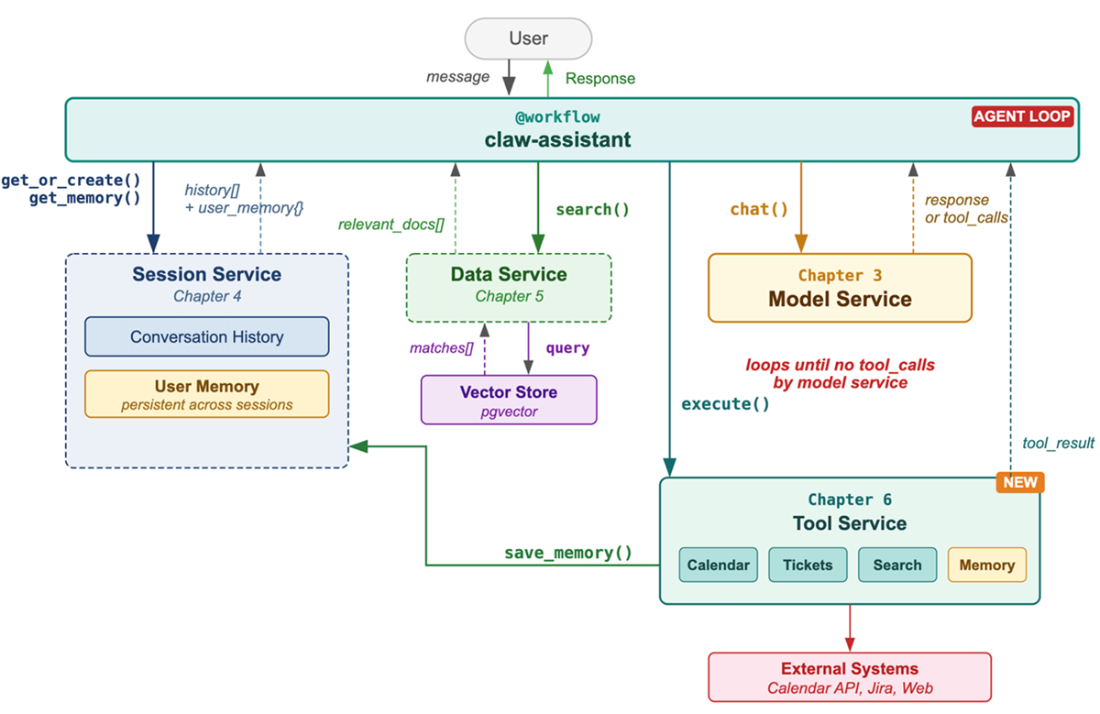
The agent-loop diagram shows tool results as the observation connecting external actions to continued model reasoning. section 10.6



