Try-catch block
A try-catch block is a control-flow construct that executes code under exception handling and transfers control to an associated handler when a matching exception occurs.
JavaScript in Depth
A JavaScript control-flow construct that executes protected code and handles exceptions thrown from it in a catch handler.
- How it is used
- Handles synchronous failures where code has enough context to choose recovery or preserve debugging detail.
- How deep it goes
- Explains stack unwinding, handler placement, and timer-callback limits; defers asynchronous propagation through Promises and async/await.
- Examples
- Uses nested function calls, a database transaction, a timer callback, and a previously unexecuted V8 catch branch.
- What you can do after
- Diagnose/debug with it by identifying which handler can catch a failure and where recovery belongs.

Python How-To
- How it is used
- Handles expected failures so applications can respond rather than crash, including during input conversion and database updates.
- How deep it goes
- Explains execution paths, specific handlers, exception details, and optional else and finally clauses, with readability guidance.
- Examples
- Uses string-to-number conversion, task urgency parsing, and a task update that may encounter a deleted record.
- What you can do after
- Apply Python exception handling to expected failures, choose specific handlers, and separate success and cleanup paths.

The Quick Python Book, Fourth Edition
- How it is used
- Handles recoverable Python exceptions with targeted handlers and optional success and finalization clauses.
- How deep it goes
- Explains handler matching, exception binding, propagation, and clause execution, then critiques unnecessary and overly broad handlers.
- Examples
- Uses spreadsheet cell conversion and formula evaluation, file processing, and word-count error-handling examples.
- What you can do after
- Build it from scratch in Python to handle specific failures and run optional success or finalization code.
Read how The Quick Python Book, Fourth Edition explains try-catch block →

Elixir in Action, Third Edition
A try construct is an Elixir control-flow construct for explicitly catching and handling exceptions and other error outcomes.
- How it is used
- Localizes meaningful failures in critical process callbacks while preserving service availability and state consistency.
- How deep it goes
- Explains error categories, pattern matching, return values, cleanup, and state rollback, then defers unrecoverable crashes to supervision.
- Examples
- Demonstrates raising, throwing, exiting, pattern-matched results, cleanup clauses, and defensive handle_call state transformations.
- What you can do after
- Diagnose and handle selected runtime outcomes while returning controlled results or preserving prior process state.
Read how Elixir in Action, Third Edition explains try-catch block →
Practical Automation with PowerShell: Effective scripting from the console to the cloud
A try/catch construct runs protected code and handles exceptions in a catch block.
- How it is used
- Handles expected operational failures while allowing adaptable PowerShell automations to continue processing.
- How deep it goes
- Explains control flow, terminating versus nonterminating errors, -ErrorAction Stop, $_, error identifiers, and finally execution.
- Examples
- Demonstrates failed WSMan session creation and a missing-service lookup filtered by FullyQualifiedErrorId.
- What you can do after
- Apply it to capture expected failures, preserve useful work, and escalate unexpected PowerShell errors.

Kotlin in Action, 2E
A try-catch is a Kotlin exception-handling construct that executes a protected block and handles matching exceptions in catch clauses.
- How it is used
- Handles recoverable failures, converts invalid input into fallback values, and performs cleanup around protected operations.
- How deep it goes
- Explains syntax, result-value rules, cleanup, Java differences, coroutine boundaries, and Flow placement, but defers broader uncaught-exception policies.
- Examples
- Uses BufferedReader parsing, nullable fallback assignment, launch and async failures, and Flow default-value emission.
- What you can do after
- Apply it via Kotlin syntax to recover from selected exceptions, return fallback values, clean up resources, and handle coroutine failures at the correct boundary.

Learn PowerShell in a Month of Lunches: Fourth Edition, Covers Windows, Linux, and macOS
Try/catch is an error-handling language construct that attempts operations and handles exceptions raised during execution.
- How it is used
- Handles failures in administrative commands, remote sessions, inventory loops, parsing functions, and reusable automation.
- How deep it goes
- Explains control flow, ErrorAction Stop, typed handlers, Finally, logging, and nonterminating-error limitations without descending into exception internals.
- Examples
- Uses remote sessions, Active Directory computer lookups, event-log parsing, service checks, and a cross-platform uptime-function lab.
- What you can do after
- Diagnose/debug with it by catching command failures, warning users, logging errors, and producing fallback results.
Software Engineering for Data Scientists
A try statement is Python syntax that encloses code whose exceptions may be handled by associated clauses.
- How it is used
- Handles failed stock-data requests while allowing a ticker-processing loop to continue.
- How deep it goes
- Explains try, except, Exception, finally, and error recording through a focused workflow, without covering broader exception design.
- Examples
- Uses yahoo_fin stock downloads, valid and invalid ticker symbols, failures lists, progress messages, and recorded exception types.
- What you can do after
- Apply try/except/finally to continue batch downloads, track failures, log progress, and inspect exception types.
Read how Software Engineering for Data Scientists explains try-catch block →
Learn PowerShell Scripting in a Month of Lunches, Second Edition: Write and organize scripts and tools
A try/catch construct is a PowerShell exception-handling structure that executes a try block and handles matching exceptions in catch blocks.
- How it is used
- Structures resilient automation tools by stopping dependent work, warning users, retrying connections, or logging failures.
- How deep it goes
- Explains terminating behavior, typed catches, fallback handling, Finally, and protocol retry while deferring broader exception mechanics.
- Examples
- Demonstrates New-CimSession, CIM queries, per-computer processing, alternate protocols, typed exceptions, and cleanup.
- What you can do after
- Apply it via PowerShell automation to stop dependent operations and implement targeted retry, warning, logging, or cleanup behavior.
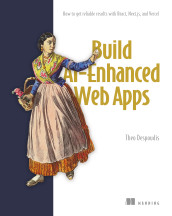
Build AI-Enhanced Web Apps
A try-catch block is a JavaScript control-flow construct that executes protected code and handles exceptions raised during its execution.
- How it is used
- Protects LangChain chain execution and supplies recovery behavior when model or provider calls fail.
- How deep it goes
- Explains protected asynchronous invocation and production fallbacks, but does not detail JavaScript exception semantics.
- Examples
- Demonstrates a RunnableSequence invocation, an intentionally invalid API key, AIErrorTracker integration, and a retryable chat error.
- What you can do after
- Diagnose/debug with it by catching chain failures, logging context, classifying provider errors, and returning retryable user feedback.
Read how Build AI-Enhanced Web Apps explains try-catch block →
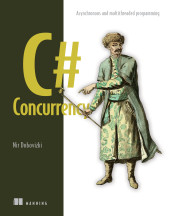
C# Concurrency: Asynchronous and multithreaded programming
A try-catch block is a C# exception-handling construct that catches exceptions raised by code in its try region.
- How it is used
- Handles exceptions by redirecting control to matching catch clauses during synchronous, event-driven, and asynchronous execution.
- How deep it goes
- Explains call-stack unwinding and deferred callbacks, but stops short of detailed catch-filter or exception-type syntax.
- Examples
- Uses event-handler, await, ContinueWith, nested-catch, and TaskCompletionSource examples to contrast exception boundaries.
- What you can do after
- Diagnose why exceptions escape surrounding handlers and place catches at the executing asynchronous or callback boundary.
Read how C# Concurrency: Asynchronous and multithreaded programming explains try-catch block →
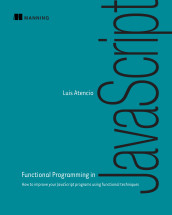
Functional Programming in JavaScript
A control-flow structure that handles exceptions by enclosing risky code in a try block and handling thrown errors in a catch block.
- How it is used
- Handles failures around JavaScript operations that may throw exceptions.
- How deep it goes
- Explains the blocks, runtime halt, stack trace, Error object, and recovery role, but stops before functional alternatives.
- Examples
- Uses findObject, findStudent, missing identifiers, and nested fallback lookups as error-handling examples.
- What you can do after
- Apply it via JavaScript by enclosing risky calls and handling thrown Error objects.
Read how Functional Programming in JavaScript explains try-catch block →
Also covered in
- Python Concurrency with asyncio
- Bootstrapping Microservices, Second Edition: With Docker, Kubernetes, GitHub Actions, and Terraform
- The Art of Code
- The Well-Grounded Python Developer: How the pros use Python and Flask
- Clojure: The Essential Reference
- Grokking Simplicity
- Test Driven: Practical TDD and Acceptance TDD for Java Developers
- Data Analysis with LLMs
- Build Applications with Local AI Models on a Mac
- Vanilla WebIn early access (MEAP)
What to know first
- exceptionAn exception is a runtime signal or value representing an abnormal condition that interrupts ordinary program flow and can be handled or propagated.
- lambdaA lambda is an expression that defines an unnamed function, specifying its parameters and body and producing a callable value.
- return statementA return statement ends the current function or routine invocation and optionally supplies its result to the caller.
- arrayAn array is an ordered collection of elements organized in one or more dimensions and accessible by position or index.
Related concepts
- except blockhas part · An except block is a Python try-statement clause that handles an exception matching a specified type.
- exceptionimplemented by · An exception is a runtime signal or value representing an abnormal condition that interrupts ordinary program flow and can be handled or propagated.
- imperative programmingused by · Imperative programming is a programming paradigm that expresses computation as ordered commands or instructions that direct execution or change state.
- finallyhas part · A finally clause is a block in exception-handling syntax that executes when control leaves its associated try construct, whether normally or exceptionally.
- catch blockhas part · A catch block is a language construct that associates a handler with protected code and transfers control to it when an exception or error is raised.
- else clausehas part · An else clause is an optional alternative branch that executes when preceding conditions are false or protected code completes without an exception.
Questions about try-catch block
What is try-catch block?
A try-catch block is a control-flow construct that executes code under exception handling and transfers control to an associated handler when a matching exception occurs.
Which Manning books explain try-catch block?
JavaScript in Depth, Python How-To, The Quick Python Book, Fourth Edition, Elixir in Action, Third Edition, Practical Automation with PowerShell: Effective scripting from the console to the cloud, Kotlin in Action, 2E, Learn PowerShell in a Month of Lunches: Fourth Edition, Covers Windows, Linux, and macOS, Software Engineering for Data Scientists and 4 more.
What should I know before learning try-catch block?
Manning books that teach try-catch block usually introduce exception, lambda, return statement and array first.
What are the parts of try-catch block?
Try-catch block includes except block, finally, catch block and else clause.
What is try-catch block also called?
Try-catch block is also called try statement, try-catch statements, try/catch construct or try-except block.
These guides are generated from the text of Manning books by Manning's knowledge graph and link to the sections they draw on. The full books are available on liveBook and at manning.com.