liveBook · Manning

Kickstarter workshop

As explained in Architecture Modernization: Socio-technical alignment of software, strategy, and structure

A Kickstarter workshop is a collaborative planning workshop that turns shared understanding into an actionable starting plan for an initiative.

A Kickstarter workshop brings diverse stakeholders together to turn shared understanding into an actionable starting plan for an initiative. It typically follows listening and mapping work, begins with business and product vision, and ends with a short- to medium-term plan. section 4.4.2 section 4.5

A pragmatic default agenda moves from strategic context to an initial delivery slice:

  • Align on the business and product vision. section 4.4.2
  • Map the current system’s capabilities and purposes, then explore the domain. section 4.4.2
  • Select a first modernization slice, design its architecture, and plan its delivery. section 4.4.2
  • Create a group responsible for preserving momentum after the workshop. section 4.5

Modernizing a tightly coupled monolith

A large Scandinavian enterprise gathered about 15 product and engineering people for a three-day, in-person workshop after stakeholder interviews, product sessions, and Impact Mapping. Product leads and the head of IT established the business vision; participants then mapped the monolith, explored the domain, selected a first slice, designed its architecture, and planned delivery. section 4.4.2
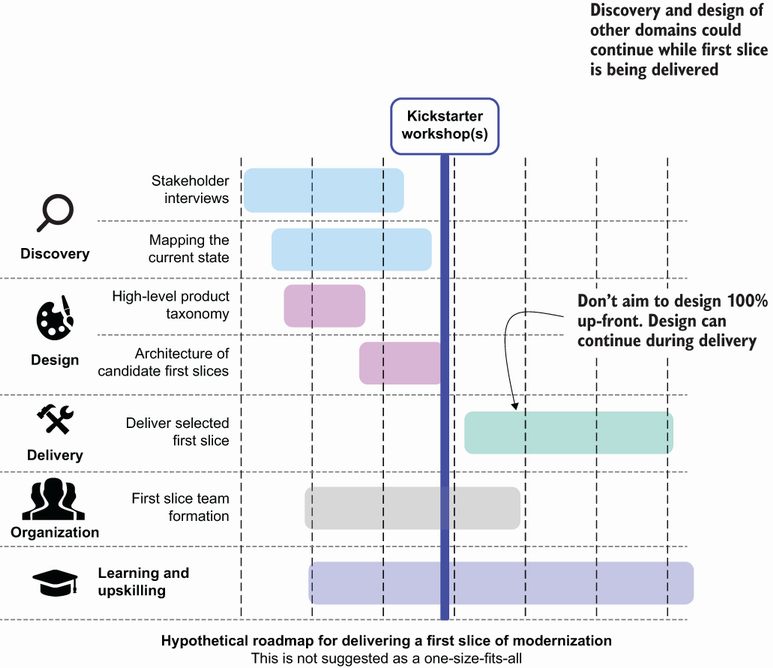
Figure 16.7 Hypothetical roadmap for delivering a first slice within six months

Use the hypothetical roadmap to connect workshop decisions with delivery of a first modernization slice within six months. section 16.2.1

How Architecture Modernization: Socio-technical alignment of software, strategy, and structure covers it

How deep it goes
Provides a flexible multi-day agenda from vision through first-slice planning, while stopping short of a copy-and-paste format.
Examples
Uses a Scandinavian enterprise, a tightly coupled monolith, a three-day gathering, and a first modernization slice as concrete examples.
What it assumes
Assumes prior stakeholder listening, system mapping, and preparation, while teaching participants to align vision with an initial modernization plan.
What you can do after
Apply it via a collaborative workshop to choose a first slice and plan delivery within roughly three to six months.
How it connects
Connects business and product vision with Impact Mapping, domain exploration, architecture design, delivery planning, and enabling teams.

Related concepts

This explainer was generated by Manning's knowledge graph from the text of Architecture Modernization: Socio-technical alignment of software, strategy, and structure. The section links point to the parts of the book it draws on.