liveBook · Manning

Teams cognitive load heuristic

As explained in Architecture Modernization: Socio-technical alignment of software, strategy, and structure

An independent service heuristic for evaluating whether a team’s responsibilities and cognitive load are bounded and realistically manageable.

The teams cognitive load heuristic evaluates whether a team’s full set of responsibilities is bounded, focused, and realistically manageable—not just whether one value stream appears reasonable. section 11.3.1

Use these questions to surface overload:

  • Would the team’s breadth of topics and context switching remain bounded enough to support focus and success? section 11.3.1
  • Does the team have a defined, realistically manageable responsibility set? section 11.3.1
  • Would infrastructure, platform abstractions, or extraneous work consume substantial capacity? section 11.3.1

When concerns emerge, adjust domain boundaries, reduce roadmap expectations, or move complexity into platforms so the team can focus on its core mission. section 11.3.1

A support-team check

A supporting subdomain team should understand why work matters and participate in discovery and design, rather than absorb externally imposed work without decision authority. section 11.3.1
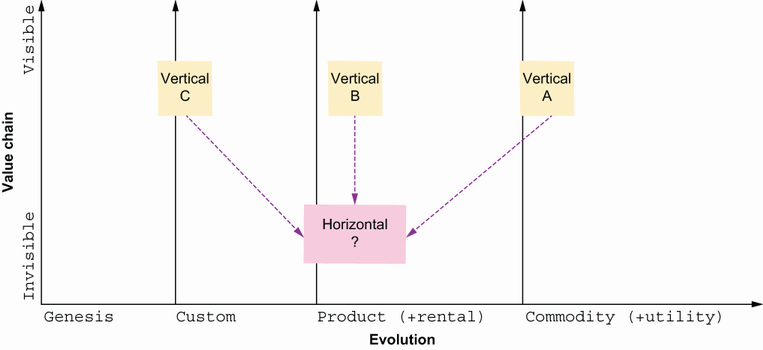
Figure 11.7 Could a single horizontal support three diverse verticals?

Use the figure as a visual prompt for asking whether one horizontal support team can realistically serve three diverse verticals. section 11.3.1

How Architecture Modernization: Socio-technical alignment of software, strategy, and structure covers it

How deep it goes
Explains cognitive load through responsibilities, context switching, infrastructure, and extraneous work, then suggests corrective actions.
Examples
Uses diagnostic questions, supporting-subdomain teams, infrastructure work, platform abstractions, and a cognitive-load assessment questionnaire.
What you can do after
Diagnose overload and respond by adjusting boundaries, reducing roadmap expectations, or shifting complexity into platforms.
How it connects
Connects cognitive load with value streams, context switching, domain boundaries, platforms, infrastructure, and team autonomy.

Related concepts

This explainer was generated by Manning's knowledge graph from the text of Architecture Modernization: Socio-technical alignment of software, strategy, and structure. The section links point to the parts of the book it draws on.