A two-way-door decision is relatively easy to reverse: if the result disappoints, a team can adjust without significant damage. Most technical choices fit this pattern, so lengthy analysis can slow teams without meaningfully reducing risk. section 1.1.2
Examples include:
- Choosing a feature design or frontend layout. section 1.1.2
- Prototyping with a new framework or choosing a logging library for one microservice. section 1.1.2
Move quickly: try an option, observe the result, and adjust. For a choice that could become hard to reverse—such as adopting a library across a codebase—first test it in an isolated module. A pilot can inform the later decision about broader adoption. section 1.1.2
Figure 1.1 Decisions that require structured analysis sit in the upper quadrants: high cost of change or high organisational impact.
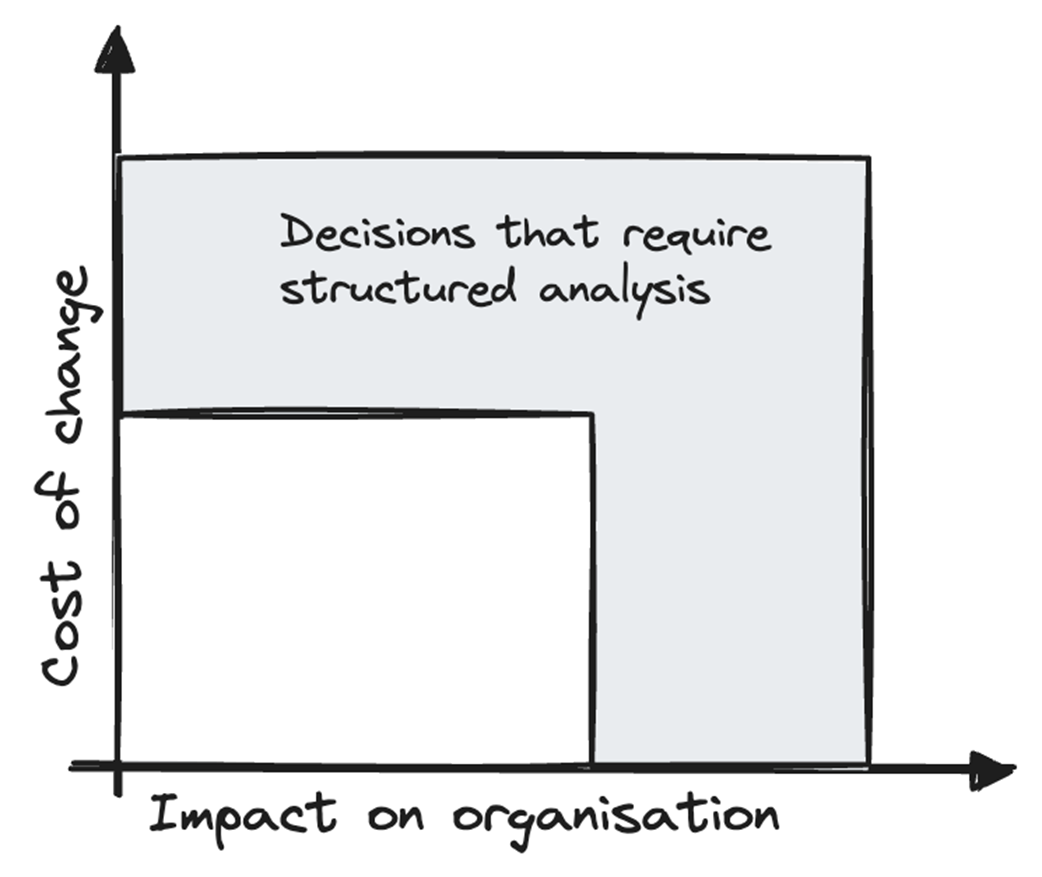
Use cost of change and organizational impact to distinguish decisions that need structured analysis from those that can move quickly. section 1.1.2