A type 1 nudge operates through automatic, nonreflective thinking. It can exploit cognitive biases without requiring people to actively consider the nudge or reflect on their response. section 7.3.3
The key distinction is whether a nudge activates reflective thinking. Type 2 nudges deliberately influence attention and invite reflection; type 1 nudges primarily affect automatic responses. Awareness of a bias alone may not reduce its influence. section 7.3.3
Confirmation bias in a modeling session
At BigScreen, Caelan searched for evidence supporting his existing beliefs about collaborative modeling. The resulting type 1 influence made the group guarded and hesitant, illustrating how automatic bias can shape group discussion. section 7.3.3
Figure 7.6 Nudges are organized based on their type and level of transparency. The figure highlights the significance of visually categorizing nudges into quadrants before application. For transparent type II nudges, individuals are informed and provided time to consider whether they wish to respond to the nudge. On the other hand, nudges that fall into the Type I, Nontransparent category are characterized by a lower awareness among people that nudges are being applied. These can potentially manipulate individuals, and the lower they are placed within this quadrant, the more unethical their use becomes. This framework serves as a guide for ethically applying nudges by understanding their effect on awareness and choice.
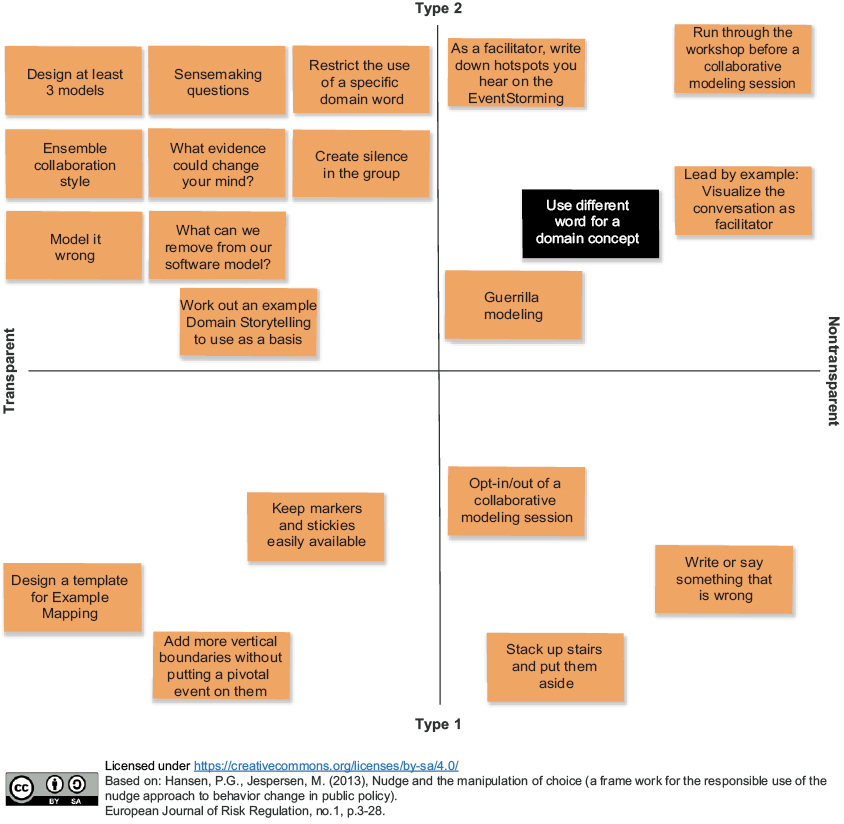
Use the type-and-transparency quadrant to assess awareness and ethical risk: nontransparent type 1 nudges can become manipulative when people are less aware of their influence. section 7.3.3
