An unstructured conversation is an open-ended interview that follows observations and participant interests rather than a fixed sequence of questions. It can surface stories, tensions, and signals worth reflecting on, including a facilitator’s own reactions recorded as field notes. section 6.3.1
Use it as early exploration, not as a guarantee that every issue affecting a collaborative session will emerge. When preparation requires specific information about power, goals, or obstacles, follow it with semi-structured interviews focused on those topics and on competing aspects of the session goal. section 6.3.1
From open conversation to focused preparation
At BigScreen, semi-structured interviews followed an unstructured interview before collaborative modeling. Participants voiced interest and uncertainty about the results; interviews also revealed conflict between two developers and perceptions of that conflict. section 6.3.1
Figure 6.3 An example map of how to model the organization and capture symbols, anecdotes, and our own thoughts. In reality, this would be a lot bigger, so we like to use online tools where we can easily enlarge the area and collaborate on capturing our observations.
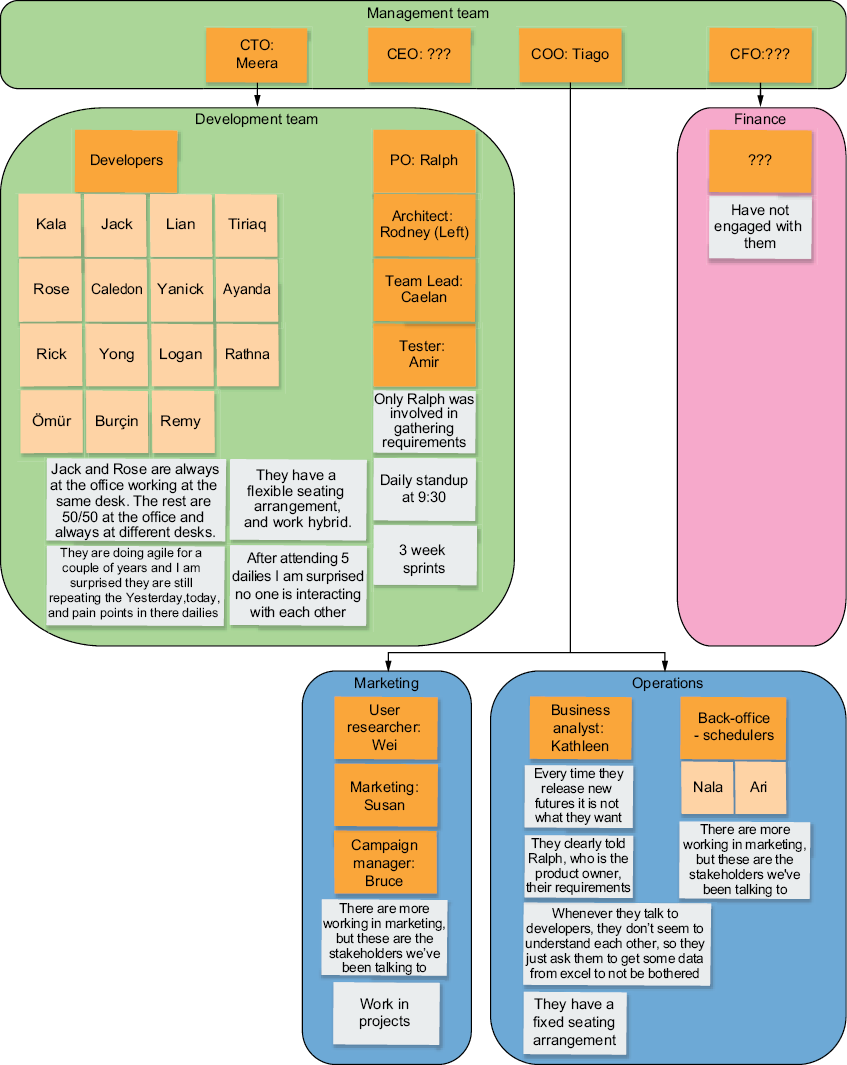
Map symbols, anecdotes, and facilitator observations together so interview discoveries can inform preparation and later facilitation. section 6.3.1

