Structured conversation
A structured conversation is a deliberately guided discussion that uses questions or an organized sequence to clarify intent, requirements, or expected behavior.

Architecture Modernization: Socio-technical alignment of software, strategy, and structure
A structured conversation is an interview or discussion guided by a predefined set or sequence of questions.
- How it is used
- Guides listening-tour interviews toward stakeholders’ goals and problems when open-ended discussion risks drifting.
- How deep it goes
- Explains how to choose tailored or standardized questions and move from prepared questions into open discussion, without prescribing a fixed script.
- Examples
- Uses questions about roadmap priorities, success, risks, innovation, and opinions of an off-the-shelf tool.
- What you can do after
- Practice/perform stakeholder interviews with questions tailored to individuals or standardized to compare responses.
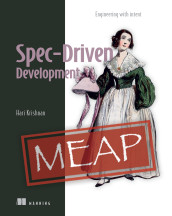
Spec-Driven Development
An interaction structured to elicit missing information and capture software intent in a specification.
- How it is used
- Uses structured dialogue to surface intent, capture it in durable artifacts, and provide context for agent execution.
- How deep it goes
- Develops dialogue through user stories and acceptance criteria, then connects missed intent to workflow improvements.
- Examples
- Uses password-reset stories and scenarios for session invalidation and expired links.
- What you can do after
- Apply stories and acceptance criteria to clarify feature intent and record verifiable behavior for implementation.
Read how Spec-Driven Development explains structured conversation →
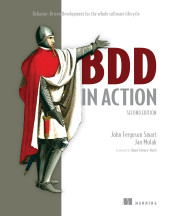
BDD in Action, Second Edition
A structured conversation is a deliberately guided discussion that establishes a shared understanding of business rules, examples, and expected behavior.
- How it is used
- Uses guided collaboration to turn business rules and expected behavior into shared understanding and valuable features.
- How deep it goes
- Defines examples, counterexamples, acceptance criteria, and executable tests, while deferring detailed process steps.
- Examples
- Uses concrete examples and counterexamples of system behavior as discussion artifacts, acceptance criteria, and automated tests.
- What you can do after
- Apply it via collaborative examples that clarify requirements, guide implementation, verify behavior, and document expected results.
Read how BDD in Action, Second Edition explains structured conversation →
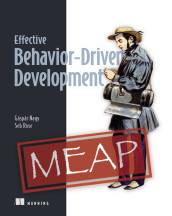
Effective Behavior-Driven Development
A structured conversation is a deliberately organized discussion that guides participants through clarifying expected software behavior.
- How it is used
- Guides requirements workshops toward shared understanding of a user story through deliberate discovery.
- How deep it goes
- Specifies five workshop properties: active participation, diverse perspectives, brevity, progressive focus, and consensus.
- Examples
- Uses concrete examples to illustrate rules and help establish unambiguous terminology.
- What you can do after
- Understand expected user-story behavior through agreed concrete examples before writing code or tests.
Read how Effective Behavior-Driven Development explains structured conversation →
What to know first
- business ruleA business rule is a domain-specific constraint, policy, or decision criterion that governs valid data, behavior, decisions, or processes.
Related concepts
- behavior-driven developmentused by · Behavior-driven development is a collaborative software development practice that specifies and verifies desired behavior through examples expressed in terms understandable to stakeholders.
- discovery workshoppart of · A discovery workshop is a collaborative, structured session for exploring and refining user needs, business problems, domain concepts, or software requirements.
- durable artifactproduces · A durable artifact is an external, persistent information artifact that records decisions, constraints, requirements, or other knowledge for reuse across agent sessions.
- implementation gapaddressed by · An implementation gap is a discrepancy between behavior intended by a specification and behavior or coverage in an implementation.
- shared understandingproduces · Shared understanding is a common interpretation of relevant information, context, assumptions, or goals held by multiple people.
- unstructured conversationcontrasts with · An unstructured conversation is an open-ended, exploratory discussion guided by participants and observations rather than predetermined questions or a fixed sequence.
Questions about structured conversation
What is structured conversation?
A structured conversation is a deliberately guided discussion that uses questions or an organized sequence to clarify intent, requirements, or expected behavior.
Which Manning books explain structured conversation?
Architecture Modernization: Socio-technical alignment of software, strategy, and structure, Spec-Driven Development, BDD in Action, Second Edition and Effective Behavior-Driven Development.
What should I know before learning structured conversation?
Manning books that teach structured conversation usually introduce business rule first.
What is the difference between structured conversation and unstructured conversation?
A structured conversation is a deliberately guided discussion that uses questions or an organized sequence to clarify intent, requirements, or expected behavior. An unstructured conversation is an open-ended, exploratory discussion guided by participants and observations rather than predetermined questions or a fixed sequence.
What is structured conversation part of?
Structured conversation is part of discovery workshop. A discovery workshop is a collaborative, structured session for exploring and refining user needs, business problems, domain concepts, or software requirements.
These guides are generated from the text of Manning books by Manning's knowledge graph and link to the sections they draw on. The full books are available on liveBook and at manning.com.