Uplift modeling estimates which people are likely to respond favorably when a campaign or intervention is applied. It addresses a causal question: whom should limited influence resources target rather than treating everyone alike? section 8.3.3
Binary counterfactual reasoning divides a target population by how an intervention changes its outcome:
- Persuadables respond favorably to the intervention. section 8.3.3
- Sure things achieve the desired outcome whether or not they receive the intervention. section 8.3.3
- Lost causes fail to achieve the desired outcome regardless of the intervention. section 8.3.3
- Sleeping dogs would achieve the desired outcome without intervention but respond negatively when it is applied. section 8.3.3
Churn-prevention promotion
A business considering promotions should seek subscribers whose churn decision changes because of the offer, rather than spending on subscribers who will stay, leave, or be harmed regardless of the offer. section 8.3.3
Figure 8.5 In attempts to influence behavior, we break down the target population into these four segments. Given limited resources, we want to target our influence efforts on the persuadables and avoid the others, especially the sleeping dogs.
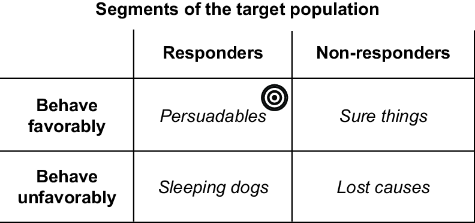
Use the population-segmentation figure to compare persuadables, sure things, lost causes, and sleeping dogs before selecting campaign targets. section 8.3.3
