Intent states why an interaction exists. In a conversational contract, it helps bound an agent’s actions alongside context, constraints, authority, expected outcome, and evidence obligations. State the purpose specifically enough to distinguish permitted interactions, without reducing it to an operation name. section 6.2.2
Quality investigation
“Assess whether lot 2418 requires containment” communicates why production history is relevant; “query production history” names an operation but not its purpose or when it is appropriate. section 6.2.2
Figure 6.2 Anatomy of a conversational contract. A conversational contract carries an agentic interaction from intent toward outcome. Context shapes how the intent is interpreted, constraints and authority define the boundary within which the agent may act, and the evidence obligation defines what must remain after the agent has acted.
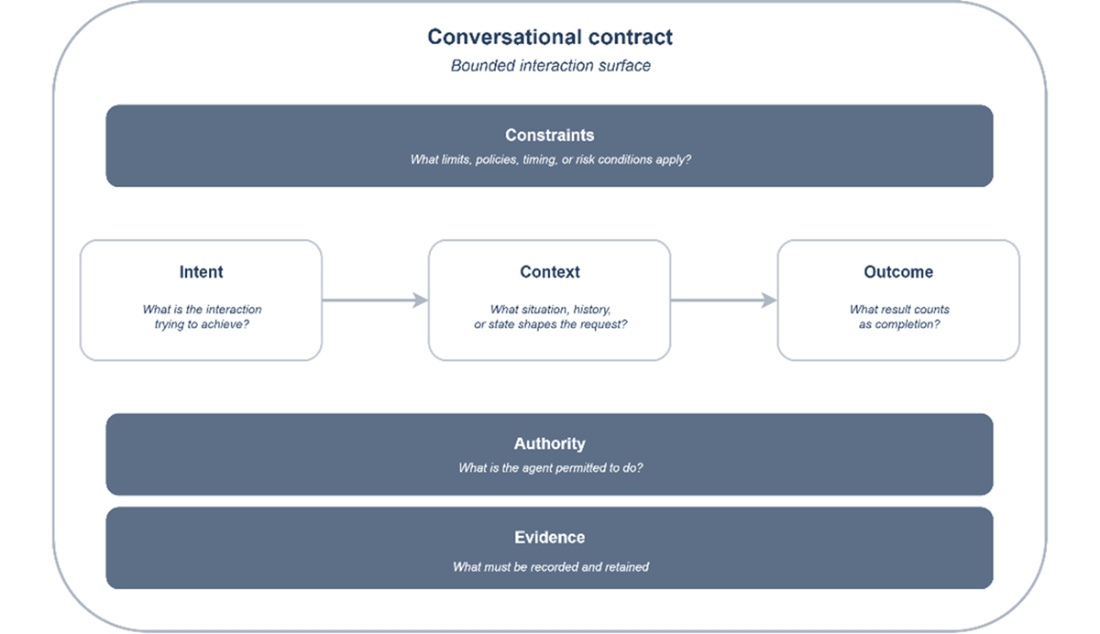
See how intent moves toward an outcome while context, constraints, authority, and evidence obligations shape the interaction. section 6.2.2