A user message carries the query, request, or context that a person provides for a model to process. Unlike stable system instructions, its content can change with each interaction. section 6.1.1 section 6.5
Place content according to whether it configures model behavior or supplies input for a particular request:
- Put changing queries, requests, context, and template variables in user messages; delimit variable content in templates. section 6.1.2
- Keep stable roles, instructions, procedures, constraints, and output formats in system messages. A conversation needs at least one user message to trigger a response. section 6.1.2
API troubleshooting request
A user might write, “My API calls keep failing. How do I fix this?” The request supplies the changing issue; the assistant can then ask for the error, endpoint, request details, and environment. section 6.1.1
Figure 6.1 Prompt types in a chat conversation: system and user prompts are designed; assistant messages are generated.
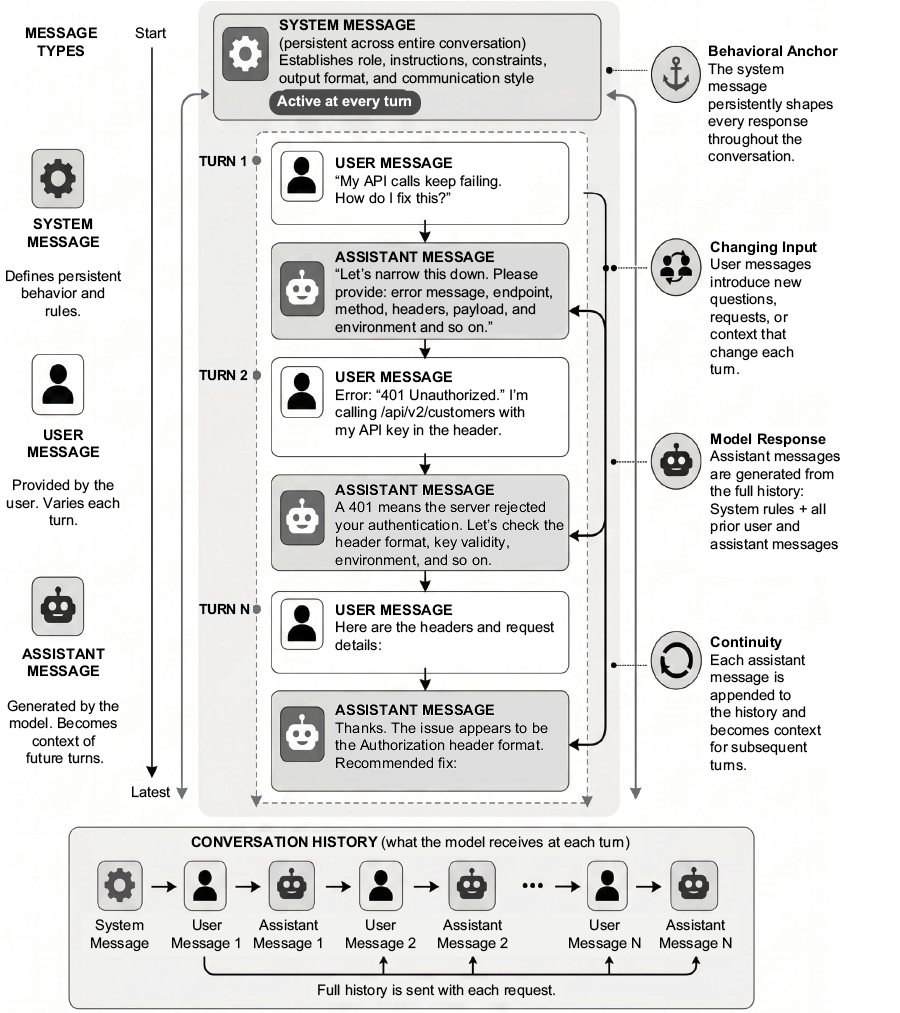
Compare the designed system and user prompts with the assistant message generated in response. section 6.1.1
