A team can ship more code while users wait longer for a fix. Value is the benefit a running system provides to the people who use it—not the amount of code written or the number of features delivered. A change creates lasting value when it meets a real need and remains correct, usable, reliable, and maintainable in production. section 1.0 section 1.1.1
Ask who benefits and how. Three overlapping lenses make that question concrete:
- User value: Help someone complete a task more easily or reliably. A clearer error message, faster page, dependable service, or correct checkout can matter as much as a new feature. section 2.2.1
- Business value: Support an outcome such as fewer support requests. An order-history feature matters when users can actually find their purchases and support demand falls. section 2.4
- Technical value: Reduce friction or risk so the system can keep serving users. A faster build can shorten feedback, reduce defects, and support reliability. section 2.2.4
Figure 2.2 Chain-of-enablement view of how value intersects among the three core value types.
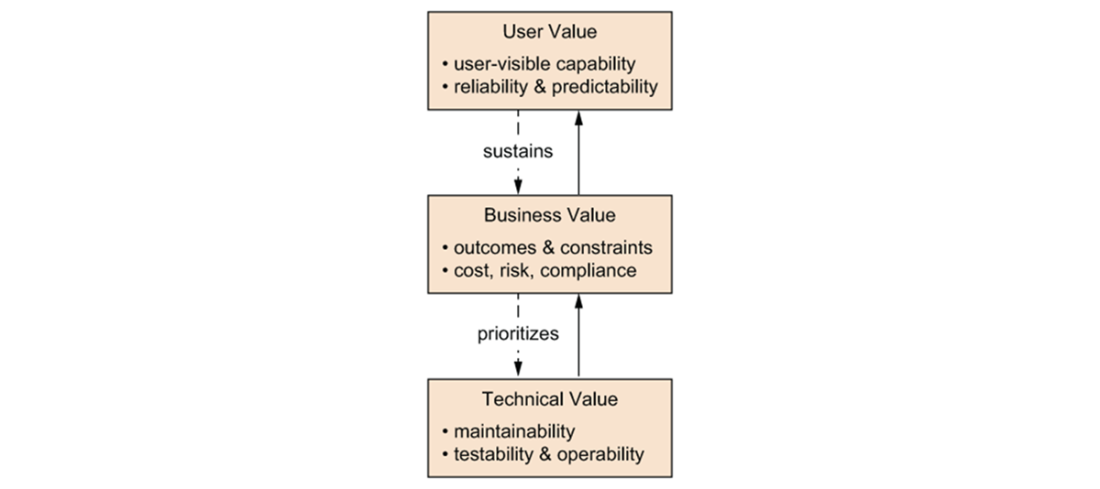
The chain-of-enablement view connects technical improvements, business outcomes, and user value without treating them as separate or fixed rankings. Feedback and current priorities affect which technical work is worth doing. section 2.2.4
Value is contextual, not a permanent label on an activity. Work that changes something a customer cares about adds value directly. Tests, monitoring, and security scans may instead enable or protect that value; they are not automatically waste because users do not see them. Ask what the work enables, for whom, and why now. If it consumes capacity without improving an outcome, question it—even when it looks like responsible engineering. section 2.2.4 section 2.3
A small fix with a long wait
A three-line fix resolves duplicate results, but reaches production ten days after the report. Investigation and repair take about eight hours; queues, handoffs, and late feedback consume much of the rest. From the customer’s perspective, the value arrives when the problem is fixed, not when the pull request is opened. Improving the surrounding flow can matter more than typing the fix faster. section 2.1
Does this test protect value?
After a payment processor changes rate-limiting libraries, tests that assert calls to the old library fail, although payment behavior has not changed. A test of whether requests are actually rate-limited protects behavior users depend on. Ask whether a test catches a real defect, survives safe refactoring, and runs soon enough to provide useful feedback. section 5.1
Apply the same question throughout delivery: Do tests prevent meaningful defects? Does deployment reduce risk? Does observability produce actionable signals? AI-assisted output needs scrutiny too: fast generation is not progress if it adds unneeded behavior or complexity. Keep judgment about value, correctness, and sufficiency with the people responsible for the system. section 1.2.5 section 3.1.3

