Virtualization abstracts computing, networking, or storage resources from physical hardware, allowing multiple logical instances to share one physical foundation. It addresses underused hardware and supports isolated environments for systems, applications, and networks. section 17.0 section 17.1
Common forms of virtualization include:
- Virtual machines use a hypervisor, or virtual machine monitor, to allocate CPU, RAM, storage, and other host resources among multiple guest operating systems. section 17.1.1
- Type 1 hypervisors run directly on physical hardware; Type 2 hypervisors run as applications on a host operating system. section 17.1.1
- Containers package an application and its dependencies in an isolated environment while sharing the host operating system through a container engine. section 17.1.2
- VLANs and VPNs create logically separate networks over shared physical infrastructure; VRF divides one physical router into multiple virtual routers. section 17.0 section 17.1
Server consolidation
Instead of dedicating one physical server to one operating system, a hypervisor can host multiple operating systems on the same server, improving resource utilization. Containers provide a lighter alternative when applications can share the host operating system. section 17.1.1 section 17.1.2
Figure 17.6 VMs connect to each other and the external physical network via a virtual switch. VMs are often segmented into separate VLANs, requiring trunk links.
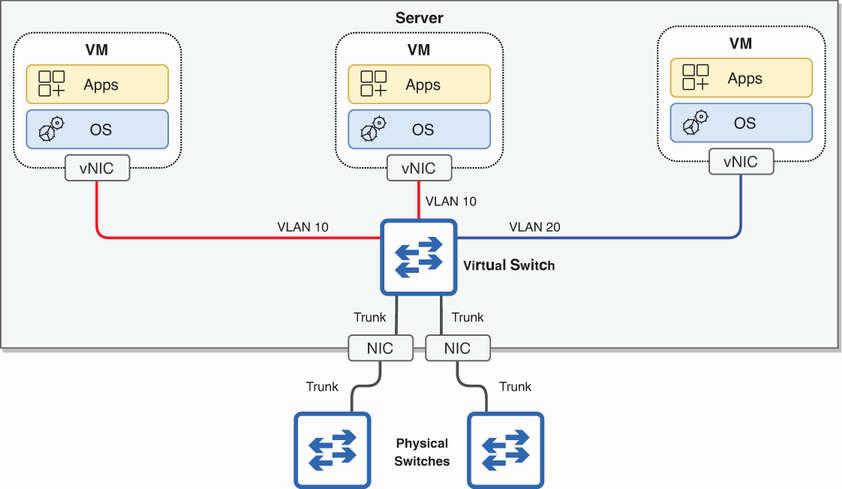
Shows how VMs use a virtual switch to communicate with one another and with the external physical network, including VLAN segmentation and trunk links. section 17.1.1
Figure 17.7 Containers run on a container engine, such as Docker Engine. The container engine runs on a host OS, but each container does not run a guest OS.
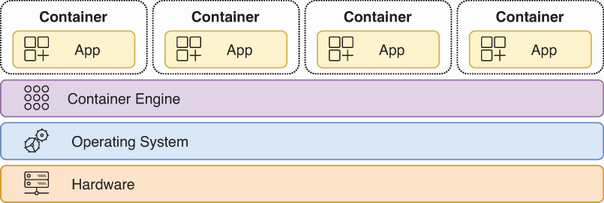
Shows the container engine and host operating system beneath containers, emphasizing that individual containers do not run guest operating systems. section 17.1.2
