A virtual private cloud (VPC) provides the network environment in which cloud resources are placed. For Anthos on GCP, the VPC design determines how resources connect, how teams share infrastructure, and how the platform scales operationally. section 10.1.1
Choose the VPC topology according to organizational structure, project boundaries, and expected scale:
- Use a single VPC for a small environment contained in one GCP project. It creates a flat network, simplifies administration, and permits communication subject to security rules. section 10.1.1
- Use shared VPC or multiple VPCs when separate projects, teams, or larger organizational requirements make one flat network insufficient. section 10.1.1 section 10.5
- Treat the initial choice as an operational decision: a simple design may later encounter VPC limits, creating scalability and management consequences. section 10.1.1
Layer connectivity controls rather than relying on network placement alone:
- Apply VPC firewalls at the network layer, Kubernetes NetworkPolicies inside the Kubernetes dataplane, and Anthos Service Mesh authentication and authorization policies at the service-mesh layer. section 10.1.1
- Connect networks through Dedicated Interconnect for large data transfers, Cloud VPN for lower-volume encrypted connections, or the public internet with TLS/mTLS service-to-service protection. section 10.5
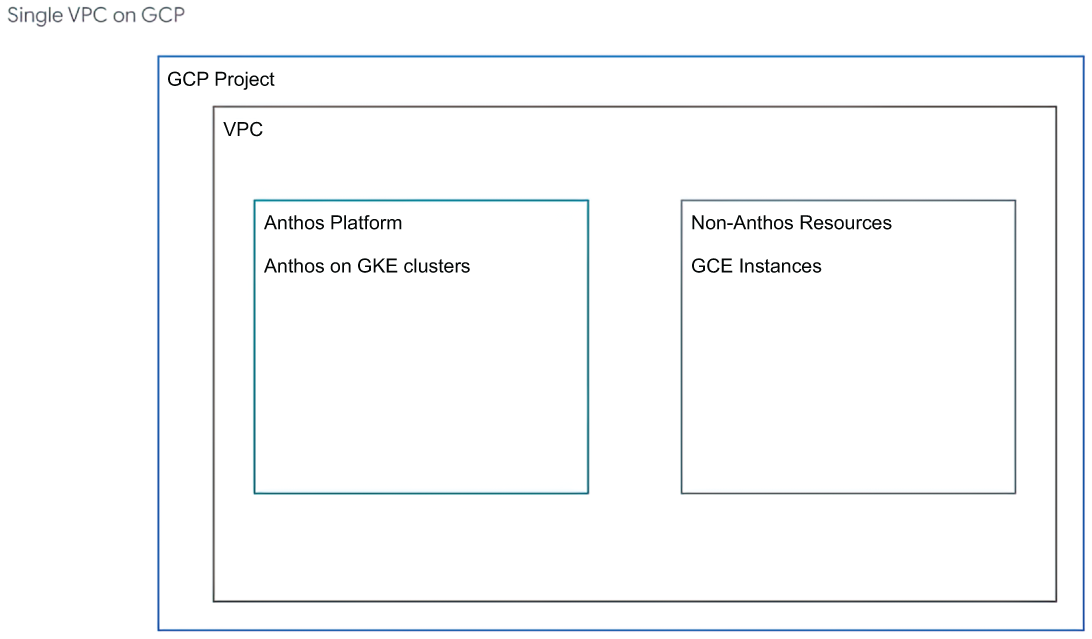
Inspect the single-VPC architecture to see the flat-network arrangement for resources in one GCP project. section 10.1.1
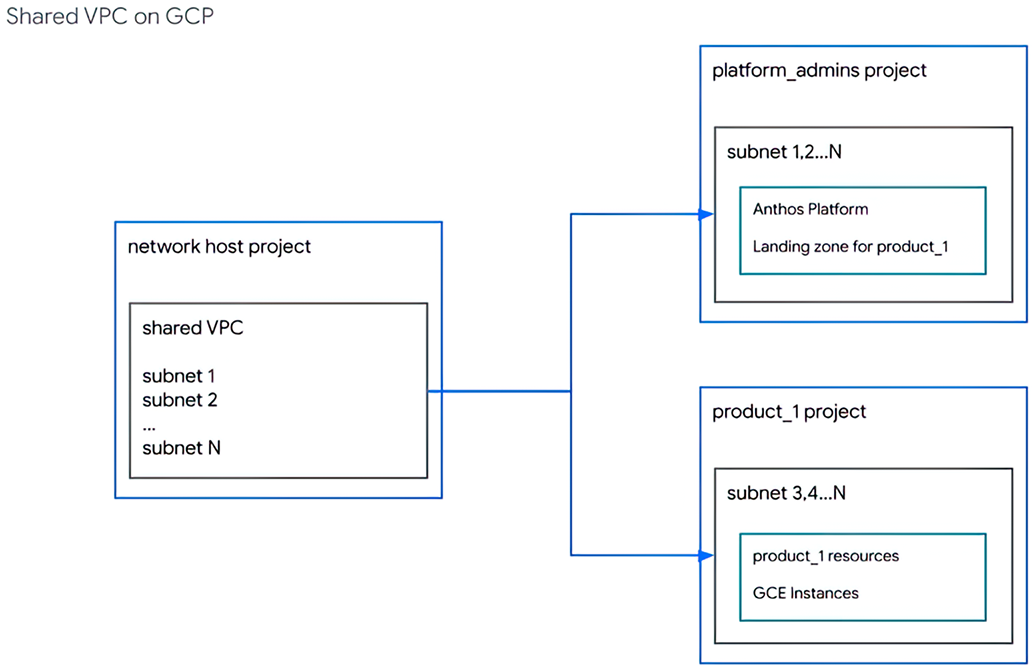
Compare the shared-VPC architecture when network resources and organizational projects require a shared design. section 10.1.1
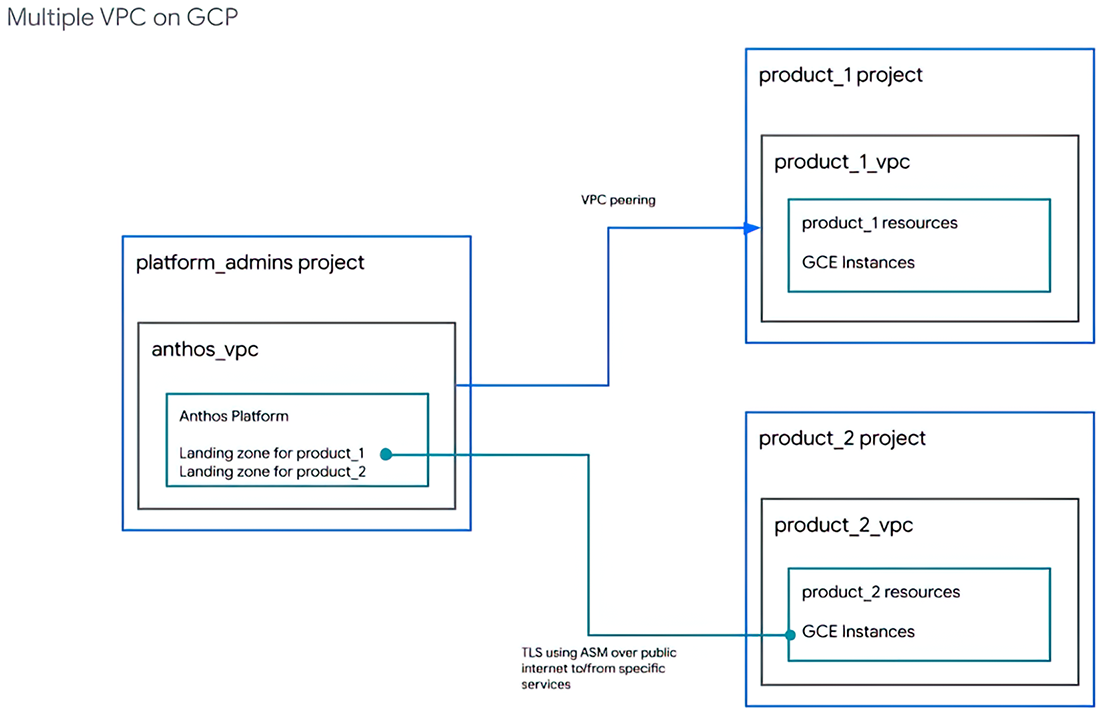
Compare the multiple-VPC architecture for environments that separate networks according to organizational or functional requirements. section 10.1.1



