A causal effect is easiest to interpret when one treatment means one specific intervention. The well-defined intervention assumption requires the potential outcome to depend on whether treatment occurred, not on how or why it was delivered. section 10.1.4
When “surgery” hides several treatments
Suppose surgeons use different techniques that affect recovery differently. Calling all procedures “surgery” combines multiple treatment versions, so the potential outcome for surgery has no single unambiguous interpretation. Either assume the surgeons have similar effects and estimate the generic effect of surgery, or define separate interventions by surgeon. section 10.2.2
Use the assumption to clarify the causal question:
- Name the treatment precisely enough that different delivery methods do not represent different causal interventions. section 10.1.4
- If treatment versions matter, model them explicitly rather than treating them as one intervention. section 10.2.2
Figure 10.1 If different surgeons have varying effects on recovery and use different methods, we can’t assume that the effect of the surgery type is the same for all because it changes from surgeon to surgeon.
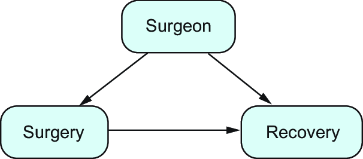
Compare a generic surgery intervention with surgeon-specific interventions when techniques may change recovery. section 10.2.2
